
Indoor climate systems
Air conditioning, fresh-air ventilation and air purification: who does what?
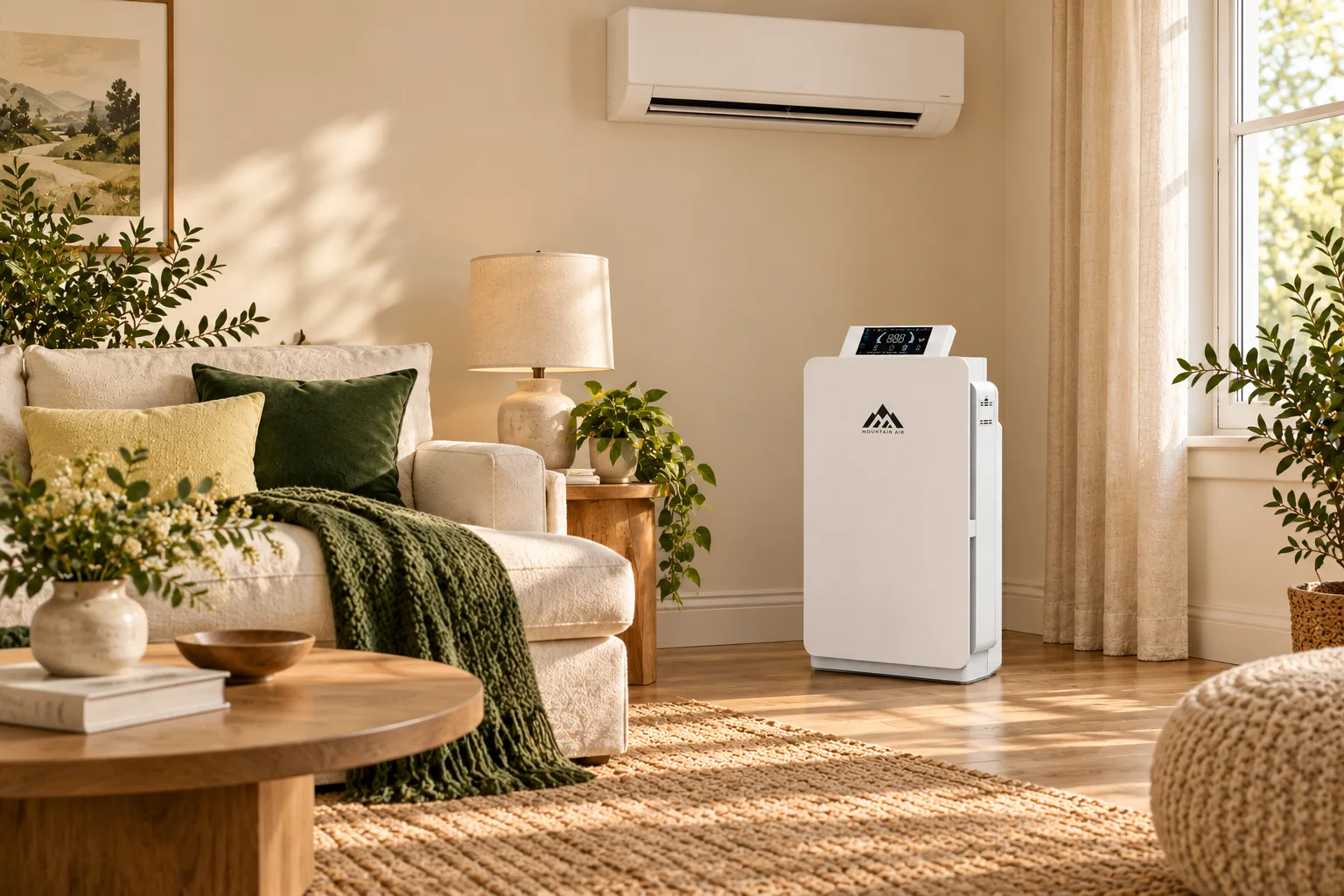
The room is cool, the window is closed and the air conditioner is running. Yet after an evening with guests, you want to open the door and step outside. “It is moving the air, so why is that not enough?”
Cooling, supplying outdoor air and filtration are separate functions. One system may combine them, but that must be checked in the particular model's design, rather than assumed from a general “climate control” label.
In this article
What an ordinary split system does
In many domestic split systems, the indoor unit cools room air and returns it to the room. Having an outdoor unit does not, on its own, mean that the system supplies outdoor air to the apartment. UMass Amherst's environmental health and safety service addresses this common misunderstanding. Explanation.
Models and integrated systems with additional capabilities do exist. In the manual, therefore, look for a specific statement about outdoor-air supply and its airflow rate, rather than a general promise of freshness.
What supply ventilation adds
Its job is to organize an incoming supply of outdoor air. Compact supply-air units are sometimes called “breezers,” but their filters, heating arrangements and capacities differ between models.
The air must also have an intended exit path. Before buying, assess the existing extract ventilation and installation requirements. Do not block required ventilation openings to preserve cool air.
NEA guidance treats spaces with split air conditioners without outdoor-air supply separately from mechanically ventilated spaces. Guidance.
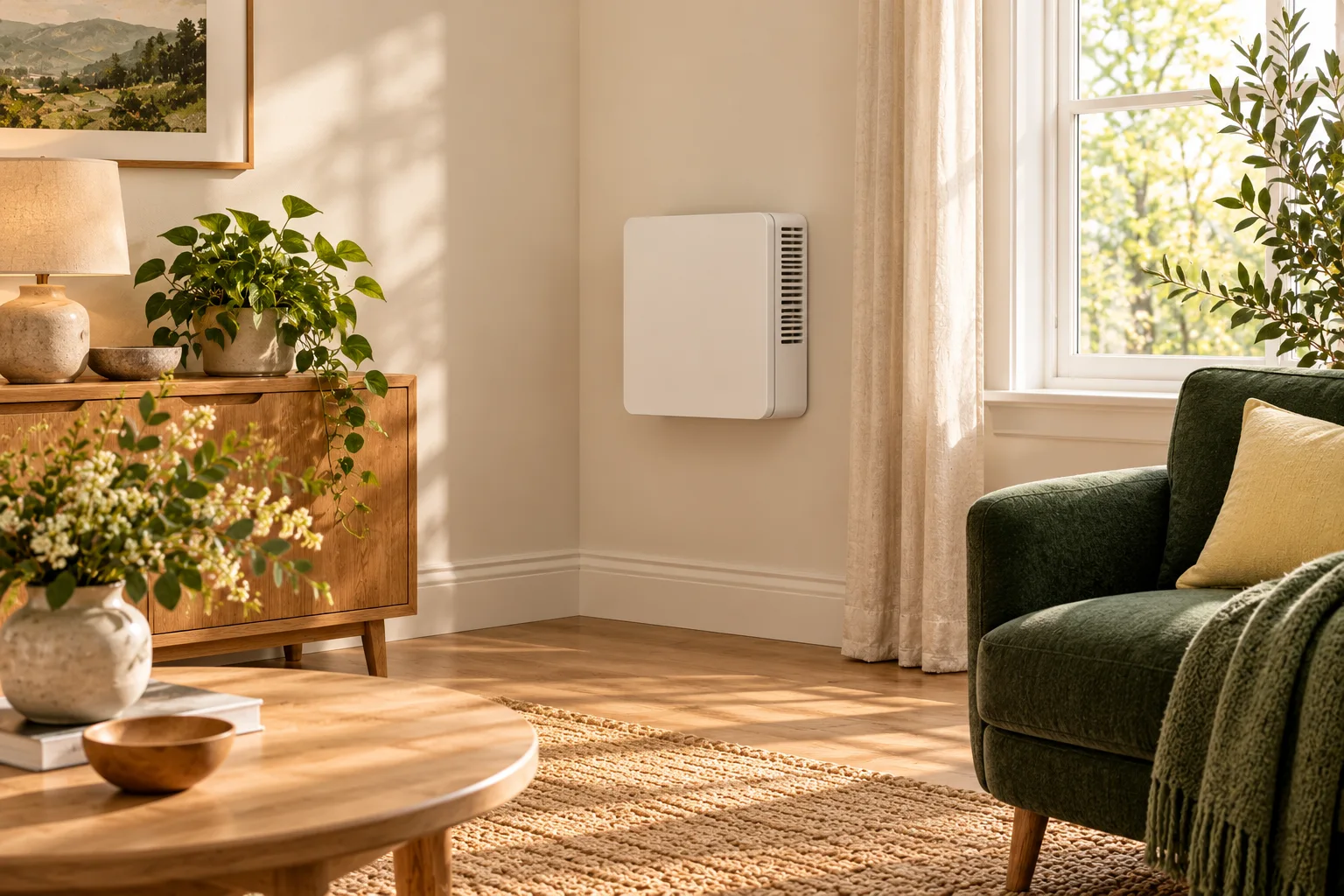
What the air purifier does
A room purifier passes the existing air through filters. It can help with relevant pollutants, but ordinary filtration does not supply outdoor air or replace cooling.
This gives three different scenarios:
- Too hot: assess cooling and heat entering the space.
- Insufficient air exchange with the windows closed: investigate ventilation.
- Airborne particles are the concern: assess their sources and filtration.
Several measures may be needed together in one apartment.
Four questions for a seller or installer
- Does the system take air from the room, outdoors or both?
- What outdoor-air flow rate is actually provided?
- Which filters are fitted, and where are replacement parts available?
- How are air extraction, maintenance and access to the equipment arranged?
Ask to see the answers in the documentation. Clarify the actual installation conditions too: the intake location matters as much as the equipment's name.
If the air conditioner has a filter, is a purifier unnecessary?
It is neither automatically necessary nor automatically redundant. Compare the filter's purpose and specifications, and the system's capacity, with the task you need to address.
Must I buy all three appliances?
No. First identify the problem and what your existing equipment can do. Some functions may be combined, while some problems can be addressed by servicing or adjusting the system already installed.
Related on this site: understanding PM2.5, CO₂ and humidity.