
Indoor greenery
Do houseplants clean indoor air? The evidence behind a popular claim
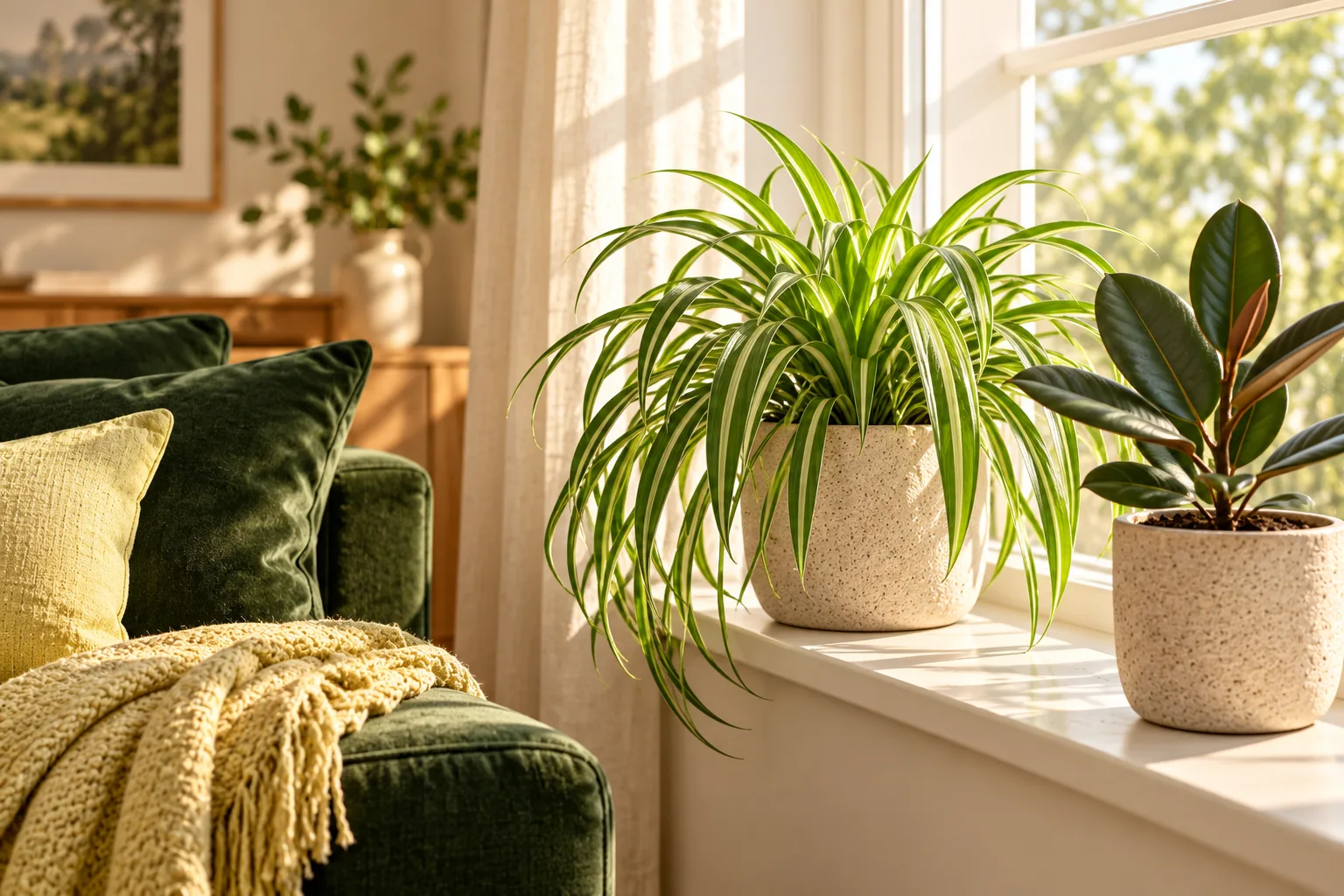
A spider plant sits on the windowsill, with a ficus nearby. Online, both are described as “natural air purifiers.” It is tempting to wonder whether adding more greenery could make the room's air cleaner.
A few potted plants should not be treated as a reliable air-cleaning system for an apartment. That is no reason to give up houseplants. Choose them for their appearance and the pleasure of caring for them, while managing ventilation separately.
In this article
Why a laboratory result is not a room result
In experiments, plants and their associated microorganisms can take up certain volatile substances. However, a small test chamber and an occupied home differ in lighting, volume, air exchange and the continuous release of pollutants.
In their review, Cummings and Waring converted published results on volatile organic compound removal into comparable performance measures. Their findings do not support using ordinary potted plants as a practically significant substitute for air exchange. This concerns passive plants in rooms, rather than every possible engineered biofiltration system. Research paper.
What to ask before buying an “air-cleaning plant”
Ask which substance the plant is supposed to remove, how quickly and under what conditions. If the answer is simply a plant name and a promise to “absorb toxins,” its benefit for your room cannot be evaluated.
Imagine a cabinet that continues to release odorous substances. Adding a plant does not tell you how their concentration has changed. A fading smell is not, by itself, a measurement of the plant's performance either.
It is more useful to investigate the source and air exchange first, then plan the decorative greenery.
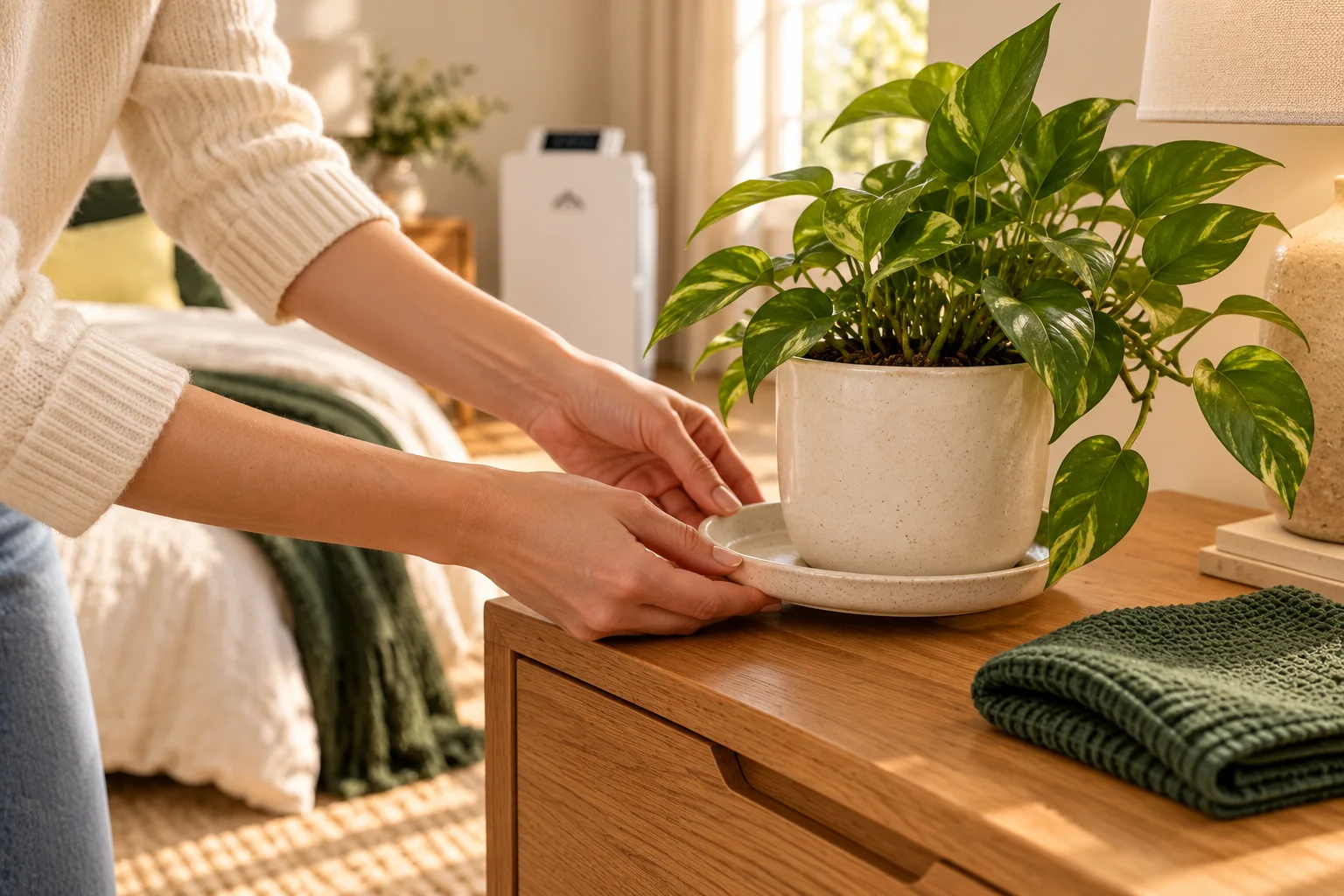
Care for plants without creating another problem
Check trays after watering, remove dead material and avoid leaving water on furniture. If a musty smell appears, inspect the soil and the area beneath the pot. Massachusetts public-health guidance notes that damp soil and poor plant maintenance can themselves create indoor-air problems. Guidance.
Avoid the experiment of adding ten more plants and stopping ventilation. The number of pots cannot replace an investigation into the actual cause of stuffiness or an odor.
What to do today
Choose plants for the room's lighting and the time you can give their care. If children or pets live with you, separately check the safety of the species. Then list the actual air-related tasks: temperature, outdoor-air supply, particles or a specific odor source. Each task needs an appropriate solution.
Does that mean houseplants are useless?
No. A lack of demonstrated practical air cleaning does not remove their decorative value. It simply does not justify assigning them the measured performance of an air purifier.
Can a PM2.5 sensor test a plant's effect?
That sensor does not measure the removal of volatile substances. A change in its reading does not prove that a plant removed gases from the room.
Further reading: EPA approaches to improving indoor air.
Related on this site: what home air-quality monitors measure.