
Air on the road
Air inside your car: using recirculation and the cabin filter
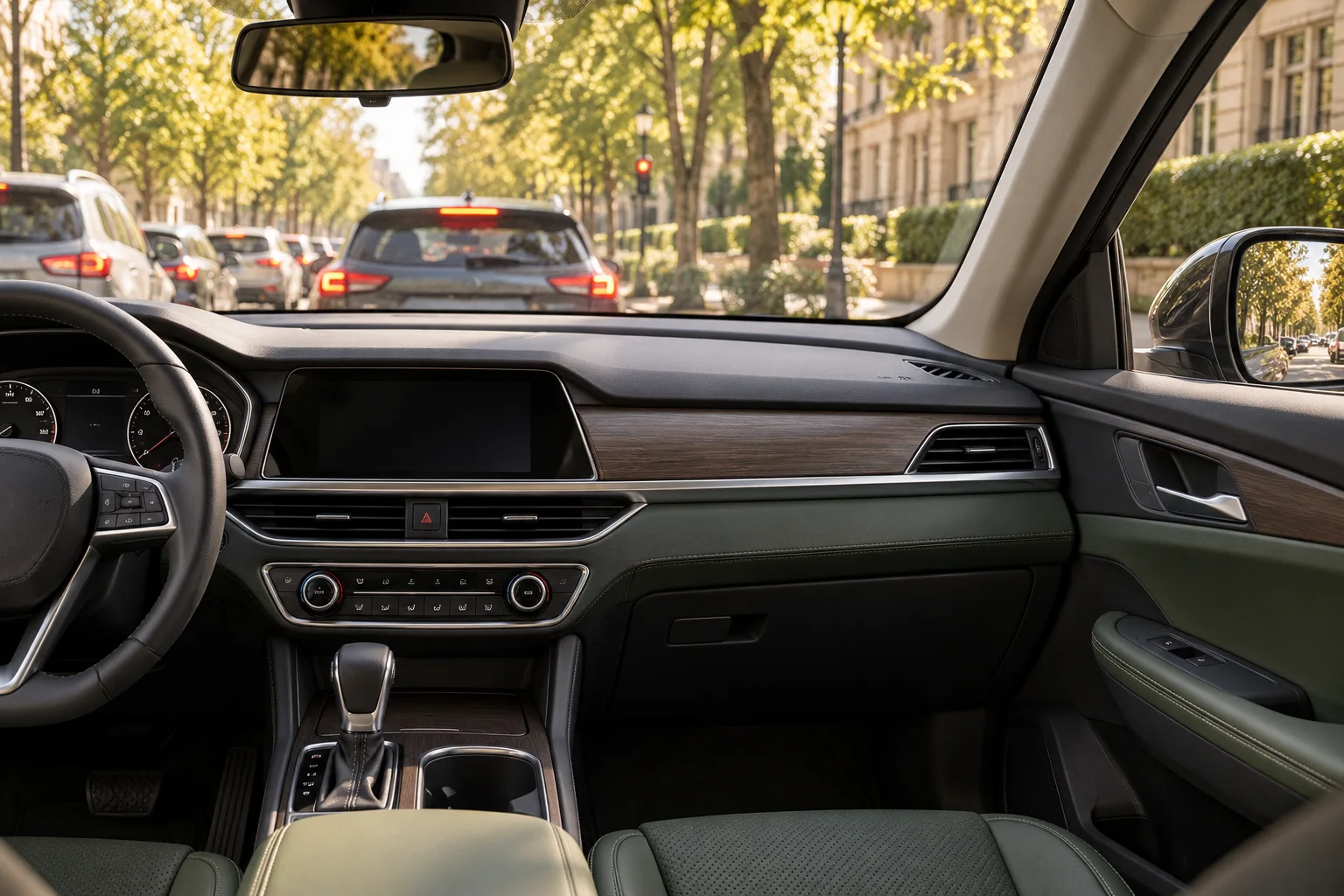
A truck ahead is emitting visible exhaust. Your finger reaches for the button showing a curved arrow inside a car. What next: leave it on for the rest of the journey or bring outdoor air back in?
Recirculation temporarily reduces the intake of outdoor air. It does not make the cabin airtight or replace ongoing air exchange. Adjusting the mode to the situation is more useful than keeping one setting forever.
In this article
When recirculation can help
A tunnel, a dusty stretch of road or a brief cloud of exhaust are situations where reducing outside intake may help. Toyota also describes recirculation as a way to cool or warm the cabin more quickly. The specific automatic controls depend on the model. Manufacturer guidance.
Once the outside source is behind you, restore the outdoor-air supply provided by the vehicle. There is no universal “exactly this many minutes” rule for every car, passenger load and condition.
Why the windows fog
People add moisture through breathing, while wet clothing and snow on footwear add more. Prolonged recirculation can contribute to fogging.
If visibility deteriorates, use the vehicle's windscreen-clearing mode according to the manual. It may automatically change the air source and air-conditioning operation. Do not try to force recirculation against that mode. A clear view matters more than attempting to exclude every outdoor particle.
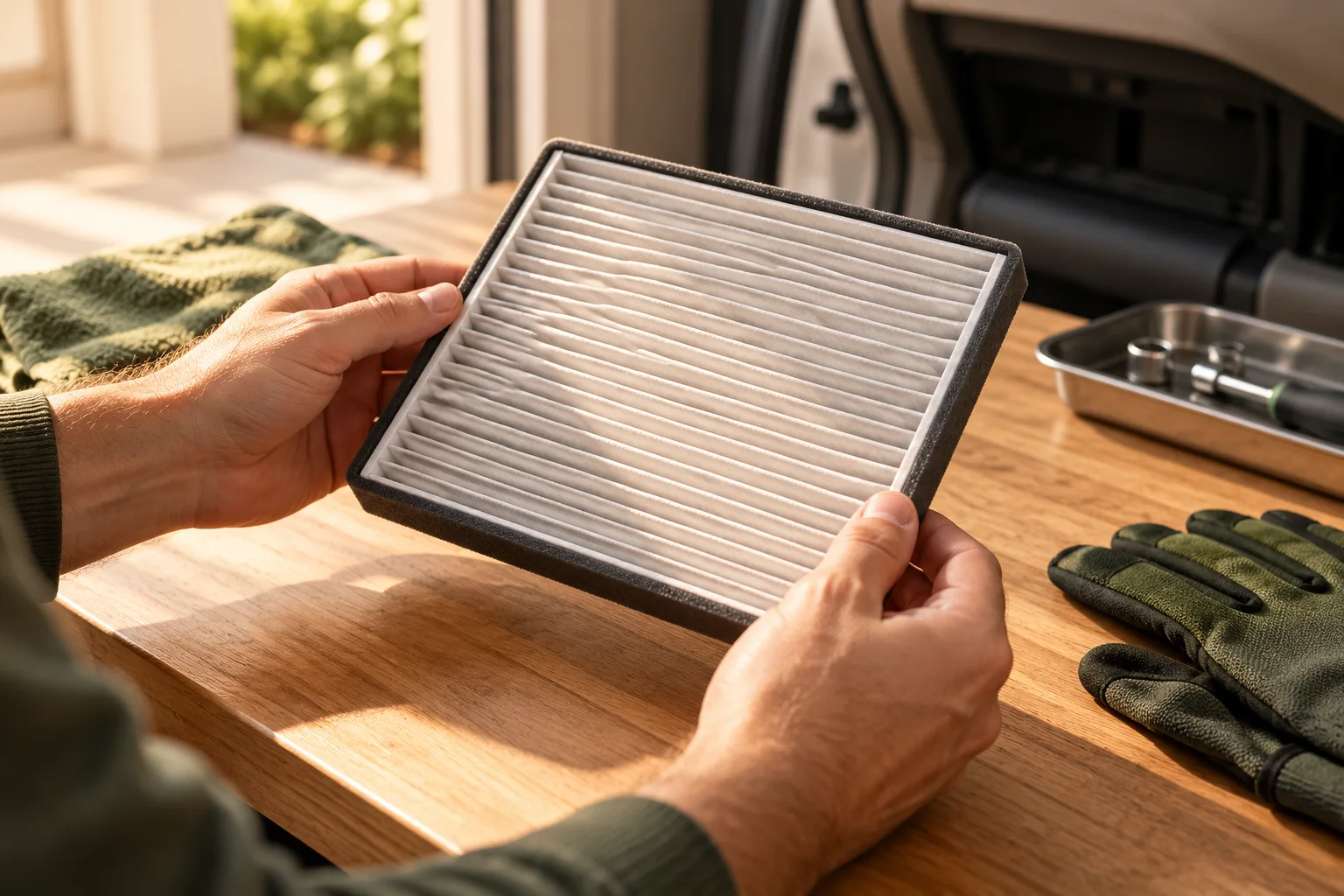
What to know about the cabin filter
The cabin filter and the engine air filter are different components. Before buying a replacement, check compatibility by vehicle model, production year and parts catalogue.
A filter with a sorbent layer may offer capabilities beyond an ordinary particle filter, but the word “carbon” does not guarantee protection against every gas. Neither that filter nor closed windows provide protection against carbon monoxide.
Follow the service schedule while accounting for operating conditions. Weak airflow or a persistent smell is a reason to check the system, not proof that the filter alone is responsible.
A simple journey routine
Before setting off, clear accessible debris from the air intake and make sure the windscreen receives proper airflow. Before a visibly polluted stretch, select the appropriate mode without distracting yourself from driving. Restore air exchange after passing it.
If exhaust odor repeatedly enters the cabin, have the vehicle checked. If headache, dizziness or nausea occur alongside suspected exhaust exposure, stop safely, move into fresh air and seek help. Do not continue experimenting with the controls.
Should everyone replace the filter after the same number of months?
No. Use the specific vehicle's schedule and your driving conditions.
If AUTO is selected, can I leave everything alone?
First check how AUTO works in the manual. Automatic-control capabilities differ.
Further reading: recirculation — Chevrolet, carbon monoxide — CDC.