
Rooms and airflow
Is one air purifier enough for an entire apartment?
The box lists a large floor area, and your apartment seems small. It is natural to consider placing one purifier in the corridor and solving the problem in every room.
But total floor area is only the start. A closed bedroom door, a long passage or a turn behind a wall can matter more than a few extra square metres.
A portable purifier primarily serves the space where it stands. In an open area it may serve a larger volume, but a floor-area figure alone cannot promise uniform filtration in separate rooms behind doors.
The EPA distinguishes portable room appliances from central-system filtration capable of serving an entire home. EPA explanation.
In this article
Calculate air volume, not just floor area
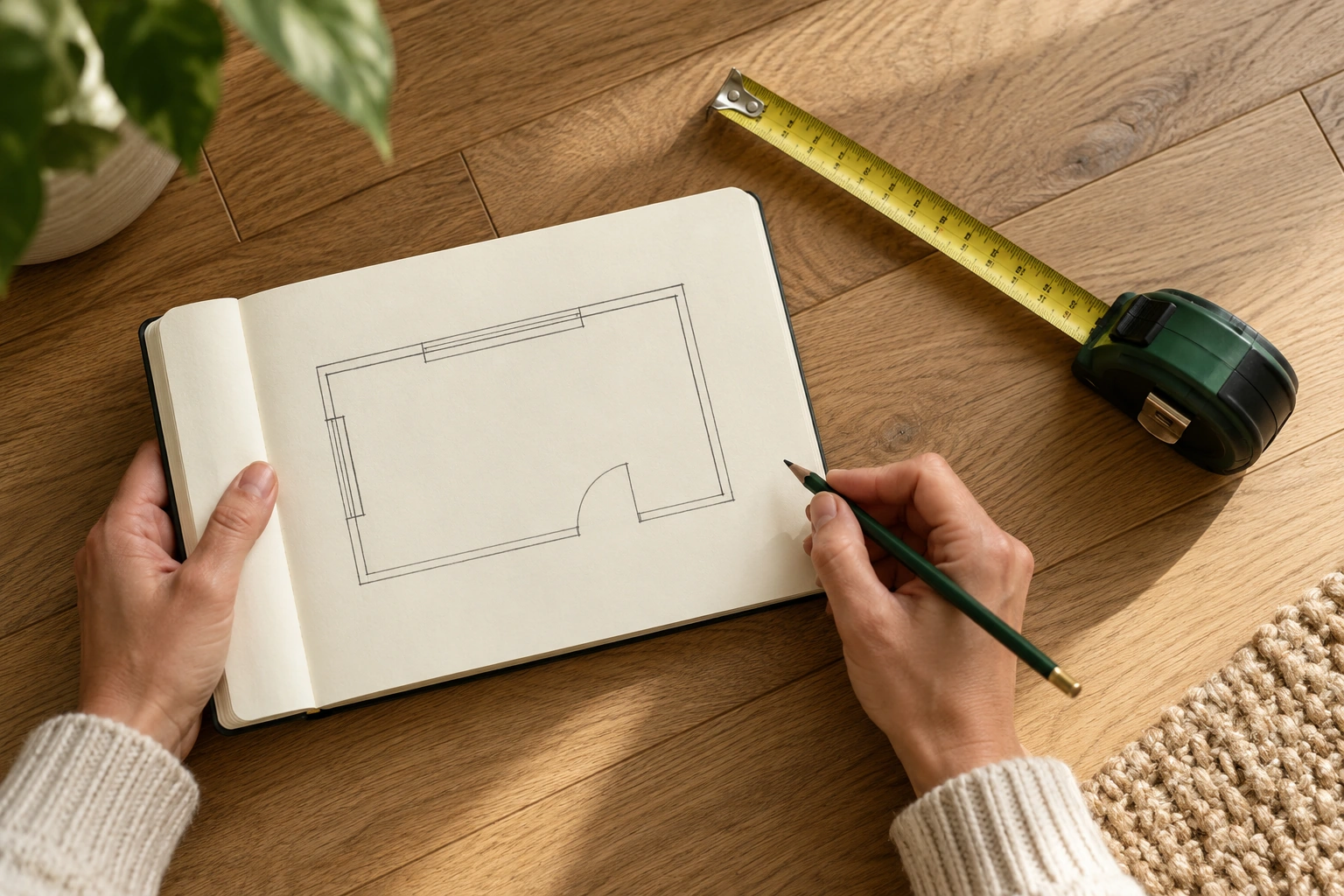
A 20 m² room with a 2.7 m ceiling contains about 54 m³ of air. The same floor area beneath a 3.5 m ceiling contains 70 m³. One appliance faces different conditions in each.
A useful approximate calculation is:
Room volume = floor area × ceiling height.
Equivalent clean-air changes per hour ≈ CADR ÷ room volume.
CADR is the clean air delivery rate, rather than simply the fan’s airflow. Compare values in consistent units.
The resulting figure describes filtration’s contribution. It is not an outdoor fresh-air supply or a promise that every particle will pass through the filter.
What the calculation shows
Our website lists a stated CADR of up to 420 m³/h for GL-K180. Using that upper value and a 2.7 m ceiling gives:
| Floor area | Volume | Calculated equivalent clean-air changes |
|---|---|---|
| 20 m² | 54 m³ | about 7.8 per hour |
| 30 m² | 81 m³ | about 5.2 per hour |
| 60 m² | 162 m³ | about 2.6 per hour |
This is an arithmetic illustration using the stated maximum. It does not measure performance in your apartment or account for partitions, incoming pollution, filter condition and actual operating speed. A quiet setting requires performance data for that setting.
Within AHAM Verifide, the suggested room size for certified models is associated with 4.8 equivalent air changes per hour. This shows why floor-area calculations need context; the figure is not a universal mandatory standard for every apartment. AHAM method.
When one appliance may be sufficient
One purifier can be a reasonable choice for a studio, an open kitchen/living area or a particular bedroom, provided its performance suits the chosen space.
Even in a studio, consider partitions and furniture. A wardrobe obstructing the airflow does not appear in the attractive floor-area number on the box.
The key question is not how many square metres are advertised, but which air volume is being treated, at what speed and where people spend time.
Why the corridor is not automatically a whole-home cleaning hub
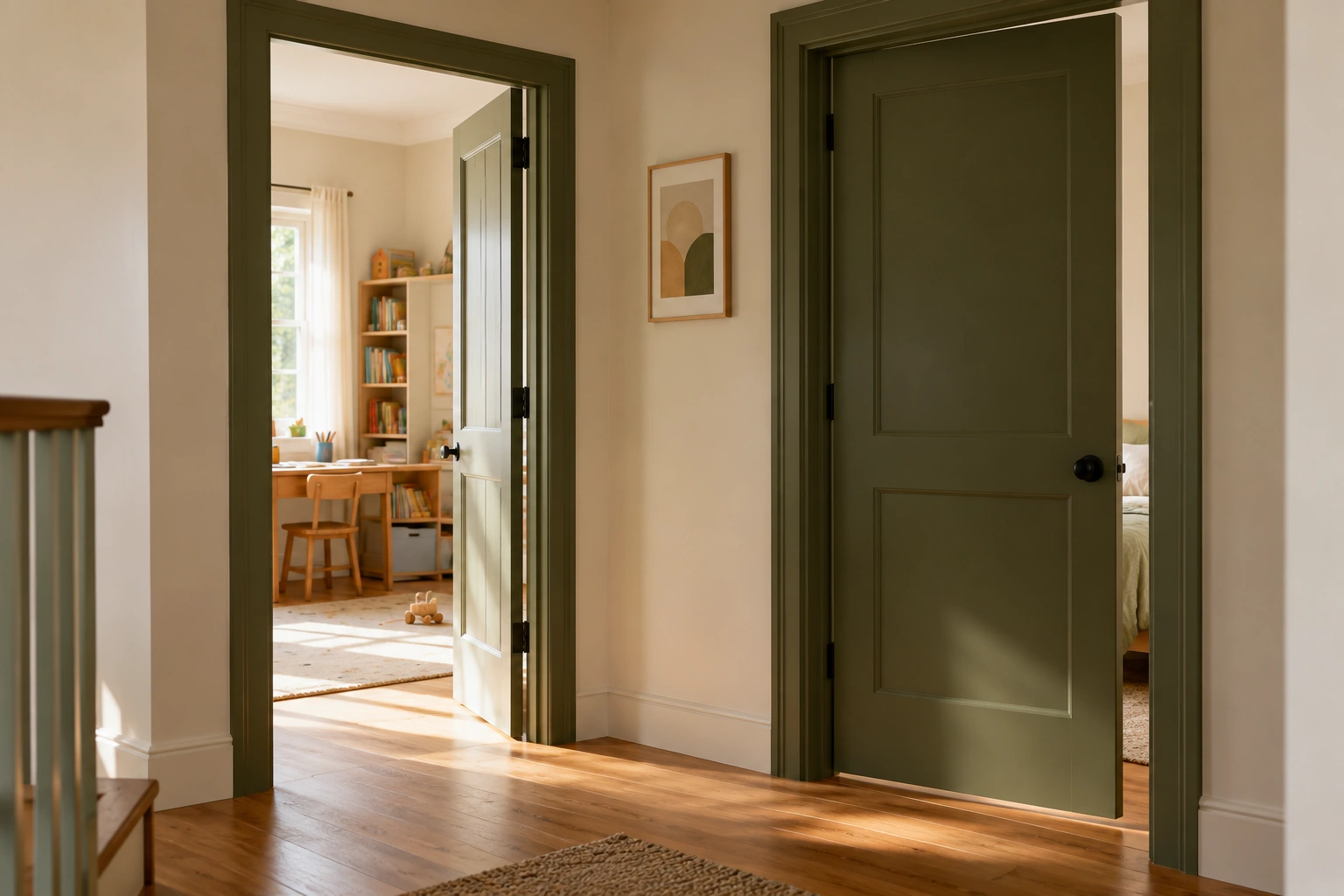
Air does not have to travel from every room to the appliance along a convenient route. One bedroom door is shut, another room has a window ajar, and the kitchen extractor is running. These conditions affect air movement.
The purifier does not create dedicated air channels through walls. Even open doors alone do not demonstrate uniform filtration throughout the home.
Low PM2.5 beside the appliance therefore should not automatically be assumed in a child’s room around the corner.
Move one appliance or buy a second?
Start with priorities.
If you spend the day mainly in the living room and the night in the bedroom, moving the purifier may be practical. However, filtration then serves the rooms in turn rather than the entire apartment simultaneously.
If several people spend long periods in different closed rooms, separate appliances may offer a more predictable arrangement. Assess each room’s actual needs before buying another purifier solely because of total floor area.
How to assess the idea at home
Write down a plan: which room is occupied and when, whether its door is open, and the purifier setting used. If you have a separate monitor, compare conditions in sequence while accounting for cooking, airing and other particle sources.
This observation can reveal weak points, but it does not replace checking the appliance specifications. Remember that PM2.5 does not assess CO₂ levels.
Should I multiply the entire apartment’s area by ceiling height?
Only when you are assessing a genuinely connected volume being served. For separate rooms, calculating each room individually is often more useful first.
Can I move the appliance several times a day?
If the instructions permit this and it is done safely. Moving it does not provide continuous filtration in the room left behind.
Choose one purifier for a defined room and usage scenario. Promising to clean the entire apartment requires more information than total floor area.