
Real-world use
Air purifier filters after 4 and 6 months: what real photos and video show
When a filter is hidden behind its cover, its condition can feel abstract: somewhere inside, the appliance is collecting dust. Opening the casing changes that impression because accumulated material becomes visible.
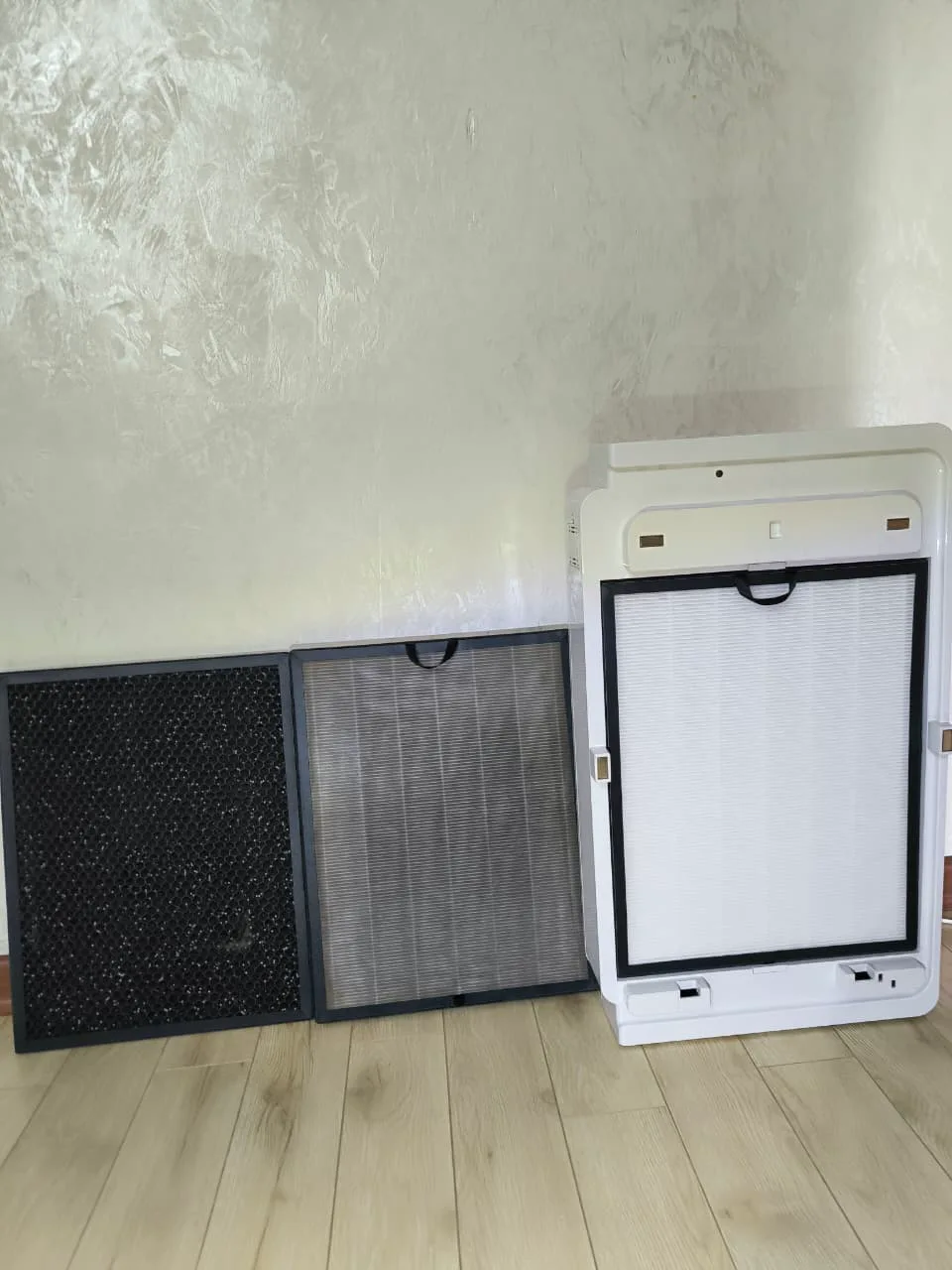
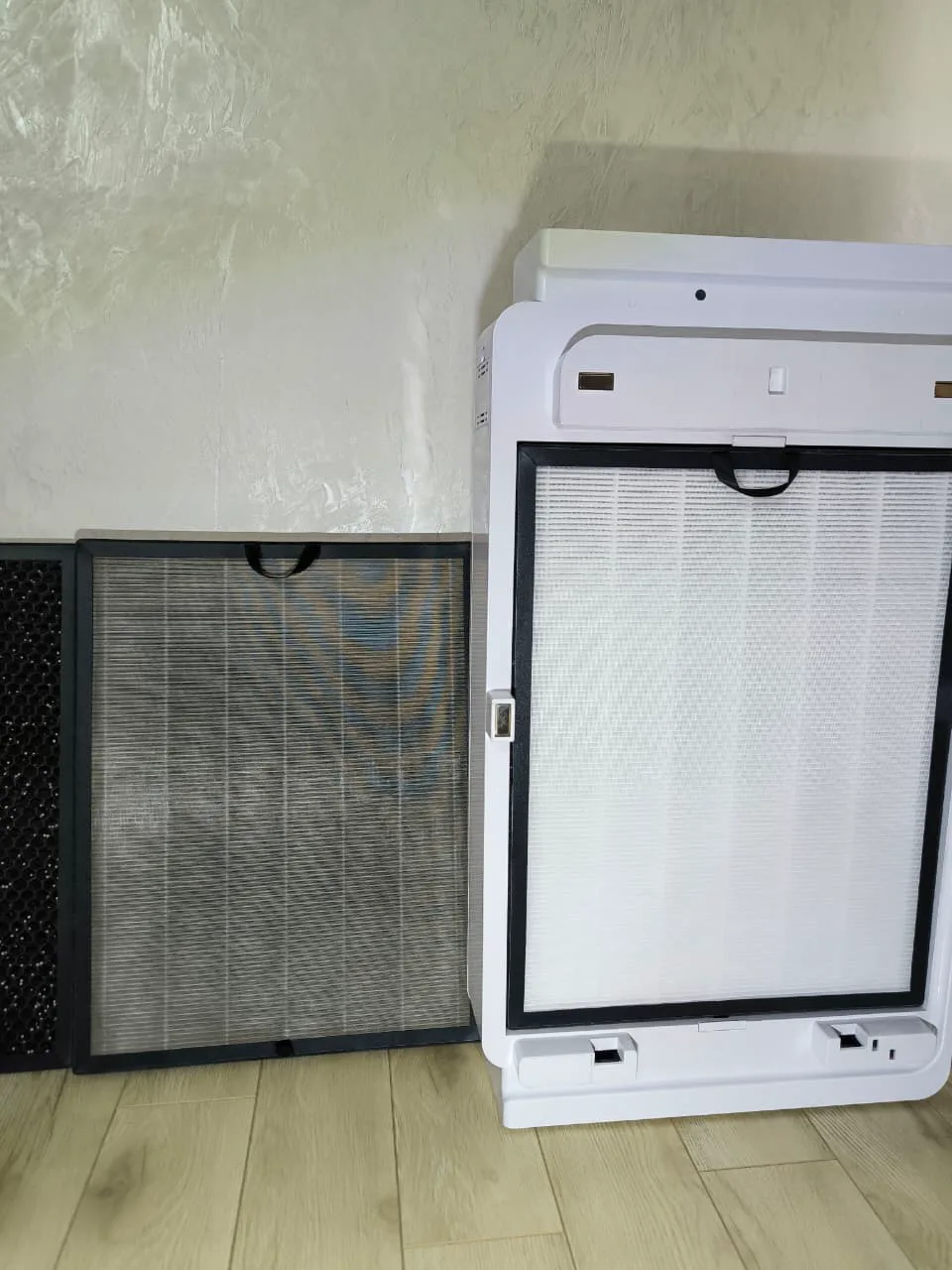
Our collection includes video after four months of use and photographs after six months. These are original photos and video from real-world use of MOUNTAIN AIR GL-K180.
Images can show visible soiling and the need for an inspection. Filter colour cannot establish a removal percentage or an exact remaining service life.
In this article
What the materials show
The four-month video shows a noticeable layer of accumulated material on the surface. The six-month photographs show the open casing and removed filter elements; one of the elements is visibly darkened.
This is a useful illustration of why maintenance should not be postponed until the first inconvenience. However, images with different lighting and angles do not provide a scale showing how “full” a filter is.
Why four months can look different in different homes
Two identical purifiers may work under different conditions. One runs for a few hours each evening; another operates almost continuously. One room faces a quiet courtyard, while another has windows frequently opened near a busy road.
Cooking, outdoor particles, household dust, textiles and pets can affect the load. Equal usage periods therefore do not mean equal filter conditions.
A calendar is useful as an inspection reminder. It does not replace examining the appliance or following its instructions.
What “up to six months” means
The GL-K180 description gives a filter service life of up to six months, subject to operating conditions and configuration.
“Up to six” does not mean the filter will necessarily retain identical properties until the last day. Conversely, darkening alone does not prove that the complete filter set must immediately be discarded.
The right questions are which element is dirty, what care is permitted and whether there are signs of an operating problem.
When to open the cover and inspect
| What you notice | What to check |
|---|---|
| Louder noise at the same speed | Check the pre-filter for a buildup of coarse dust, pet hair and fur.
Cleaning helps remove extra noise caused by a dirty pre-filter. If the noise remains, check the filter fit and arrange a diagnostic inspection. |
| A layer of dust on an accessible surface | Which element it is and what care is permitted |
| Noticeably weaker airflow at the same speed | Grilles, pre-filter, filter seating and maintenance needs |
| An unusual smell | Possible source, filter condition and manufacturer guidance |
| A maintenance reminder | What that indicator actually means in the instructions |
A single sign does not establish the cause. Weak airflow, for example, may also result from an obstructed grille.
Maintenance and replacement guidance should come from the appliance documentation, an approach also supported by the New York State Department of Health.
Why all elements cannot be cleaned in the same way
A pre-filter, HEPA medium and sorbent layer serve different purposes. A care method suitable for one does not automatically suit the others.
Permission to clean the pre-filter does not mean permission to wash the whole filter assembly. Do not rinse, blow through or treat an element with a product unless the manufacturer allows that method. Unplug the purifier before maintenance.
Correct reinstallation matters too: direction, seating and a properly closed cover are important. Resetting a maintenance indicator does not clean the filter or restore its service life.
Keep a simple maintenance record
Four notes are enough:
- filter installation date;
- approximate operating pattern;
- inspection date and a photograph;
- maintenance or replacement performed.
For comparisons, photograph the same side under similar lighting. Do not dismantle more than the instructions allow.
This record is more useful than a universal instruction to “replace it strictly every six months,” because it preserves the history of your particular appliance.
Does a dark filter mean the air at home is dangerous?
Its colour cannot reveal PM2.5 concentration, pollutant composition or the condition of all the air. Each assessment requires appropriate evidence.
Is a light-coloured filter definitely still good?
Not necessarily. Appearance cannot fully assess all functions, including the sorbent material’s ability to deal with odours.
Real photographs are useful reminders to maintain the appliance. Base maintenance decisions on the instructions, element condition and operation, rather than a single shade in an image.