
Private medical clinics
The doctor has yet to call the patient. The waiting room has already made an impression.
MOUNTAIN AIR selects air-cleaning systems for businesses in Almaty and across Kazakhstan.
What we do
We select filtration for a patient area agreed with the clinic’s facilities and hygiene lead, considering footfall and cleaning schedules.
We match the setting to your routine and check PM2.5.
We show staff how to clean the pre-filter and replace the other filters.
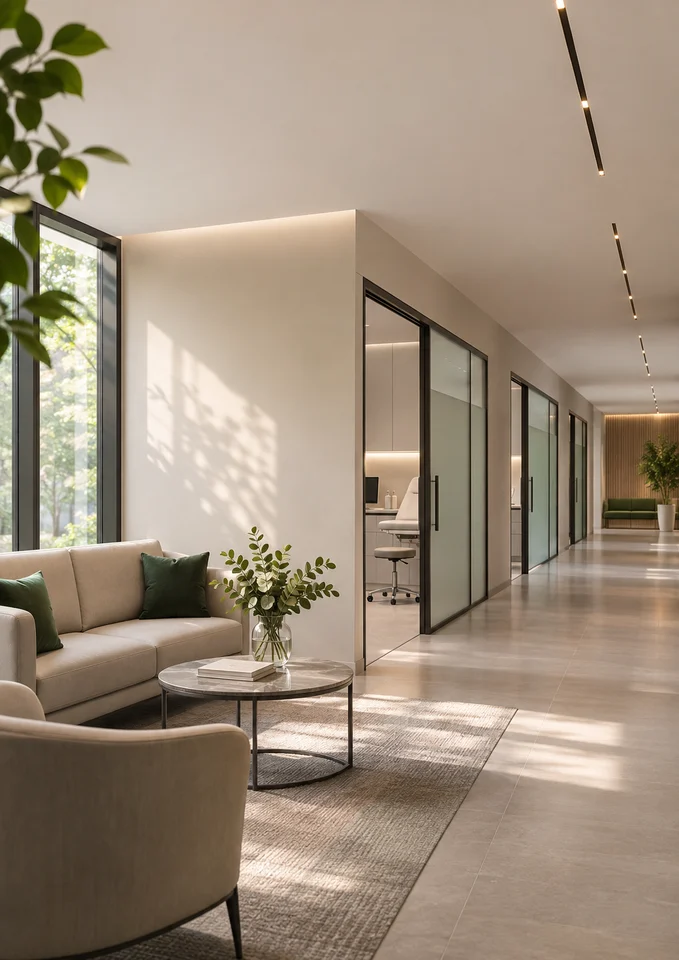
01 · What happens in the room
The patient is still waiting. The lobby is already shaping their impression.
Air at the entrance and in the waiting area can differ. Outdoor particles enter through the door, and dust from footwear and cleaning-product odours can add to them indoors.
If a room has recently been renovated or redecorated, paint, varnish or adhesive odours can linger for a while. These products can release volatile organic compounds (VOCs). Formaldehyde is one of them. Some pressed-wood furniture can emit it when new and after years of use. Emissions usually decline over time and their duration depends on the material.
An open window gives outdoor PM2.5 a direct route inside. With windows shut, particles can still enter through doors, fresh-air intakes and leaks around windows and doors. Outdoor particles add to the dust and chemical odours already in the room.
Most seats are taken before morning appointments. The entrance keeps opening, visitors arrive in coats and cleaning-product odours may linger. A patient whose appointment is delayed stays in that same area longer than expected.
Shoes and coats bring in road dust. Fine particles can be stirred up as the queue moves. Recent renovation or new furniture can add volatile compounds. Smells and particle levels are different issues even when patients describe both as stuffiness.
Cleaning odours can mingle with smoke from outside. Some fine particles can remain airborne after the smoke smell fades.
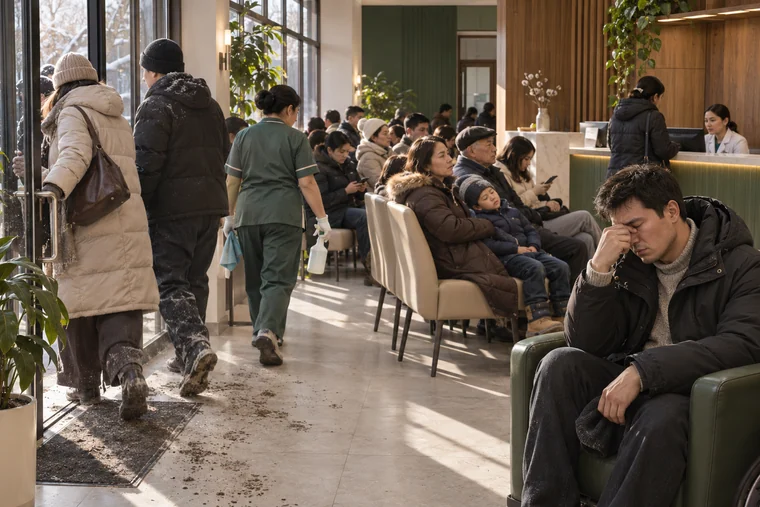
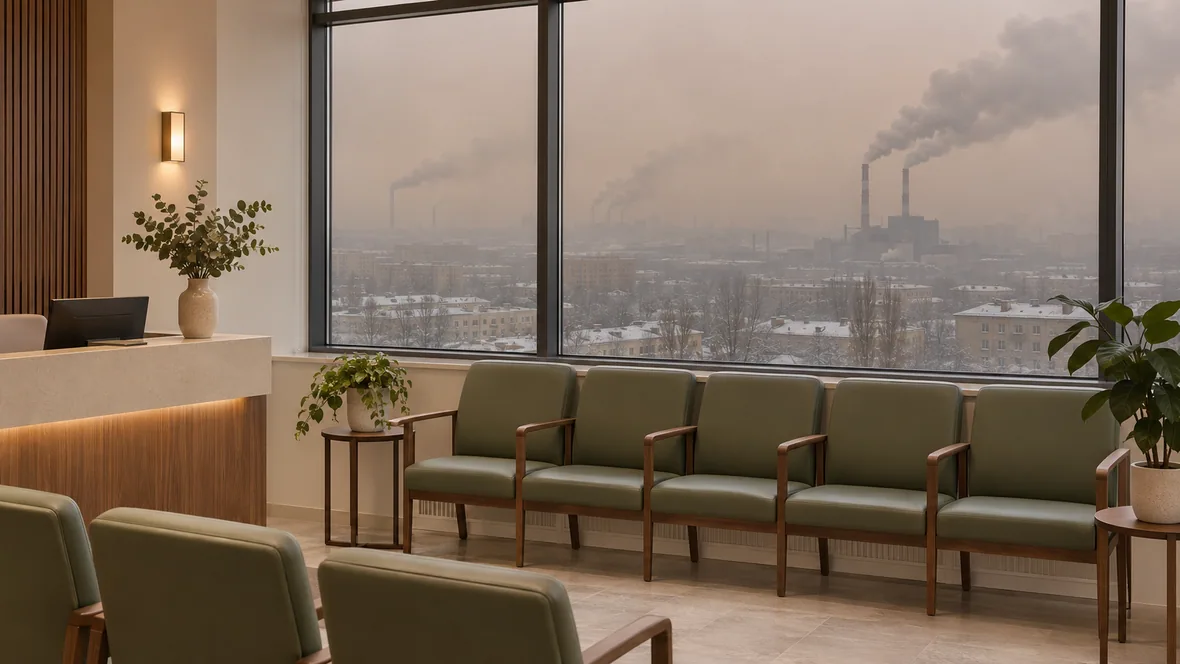
When smoke drifts in from outside
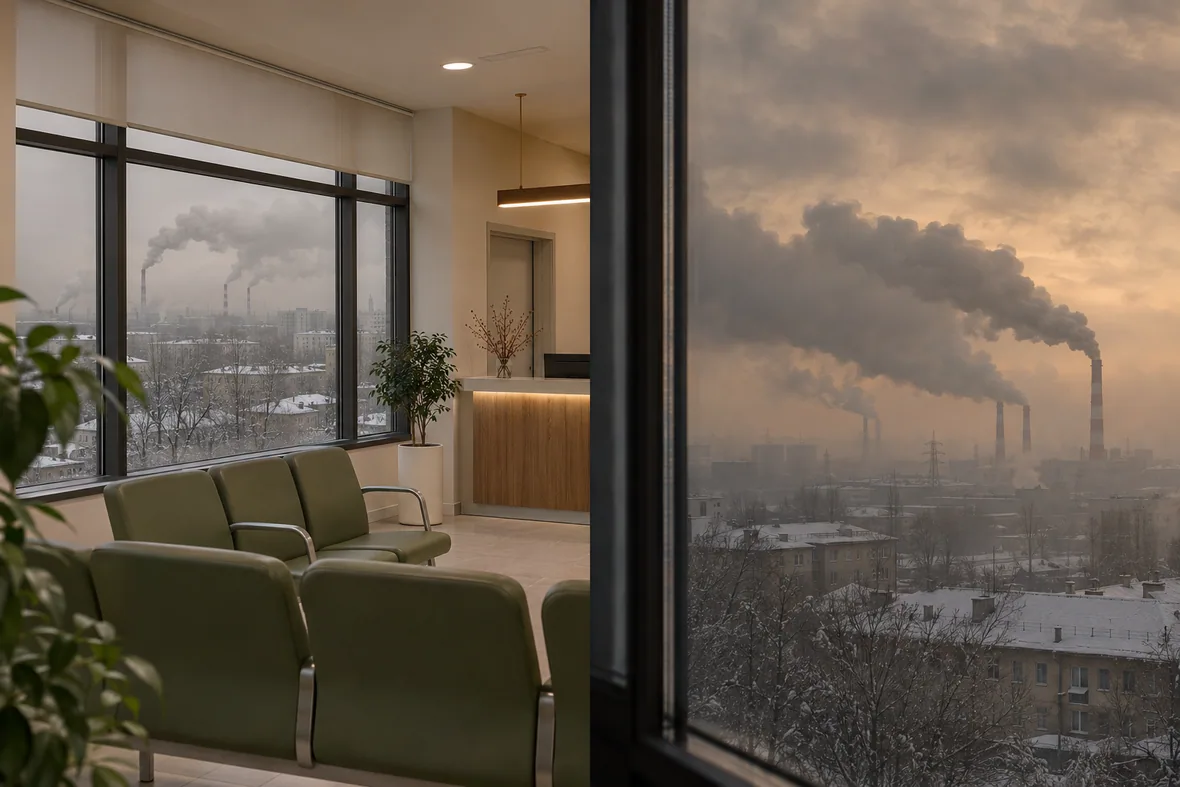
During heating season, fuel burning adds to road exhaust, industrial emissions and road dust. In calm weather and during a temperature inversion, pollution disperses more slowly and can build up near ground level.
Fine particles, including PM2.5 and PM1, can enter through windows, doors and fresh-air intakes. If tyres or rubber are burning, the smoke can also carry gaseous pollutants, including volatile organic compounds (VOCs). Haze and smoke odour alone tell you neither the source nor the particle concentration.
The morning rush can coincide with traffic emissions. Each opening of the entrance can bring fine exhaust and smoke particles into the lobby. Road dust from footwear and volatile compounds from cleaning or new finishes add to the load.
02 · How we tackle it
Filtration in an approved waiting area
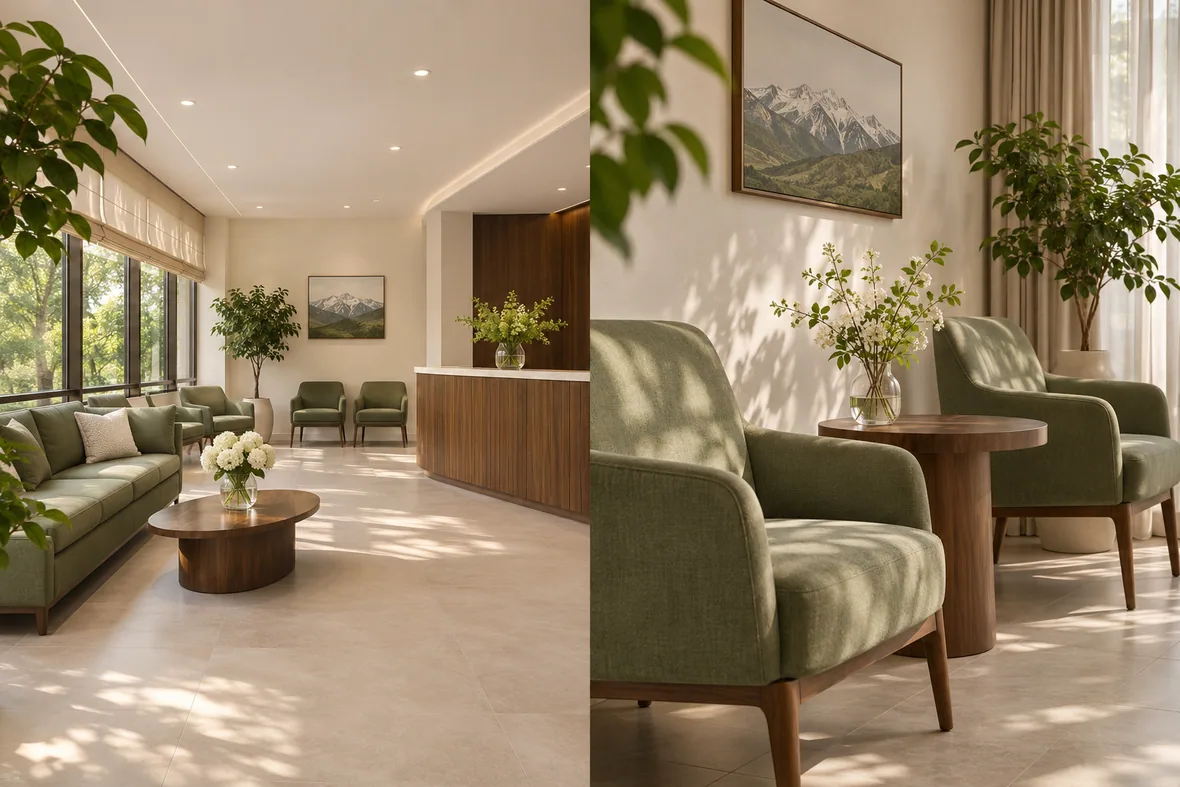
Agree a public waiting area with the clinic’s facilities lead. H13 HEPA filters fine particles in the air passing through the unit. Carbon layers can help with some residual odours after cleaning. Check product use and fresh-air supply separately.
Compare PM2.5 in the waiting area at similar levels of foot traffic. The clinic approves placement. Treatment rooms, infection control and clinical ventilation have their own requirements.
What the HEPA filter and the sorbent layers do
PM2.5 and PM1 are fine-particle fractions. H13 HEPA traps them in the air that passes through the filter. The GL‑K180 display reports PM2.5. Sorbent layers can reduce some odours and volatile organic compounds (VOCs). The cold-catalyst layer is designed for certain gaseous pollutants, including formaldehyde.
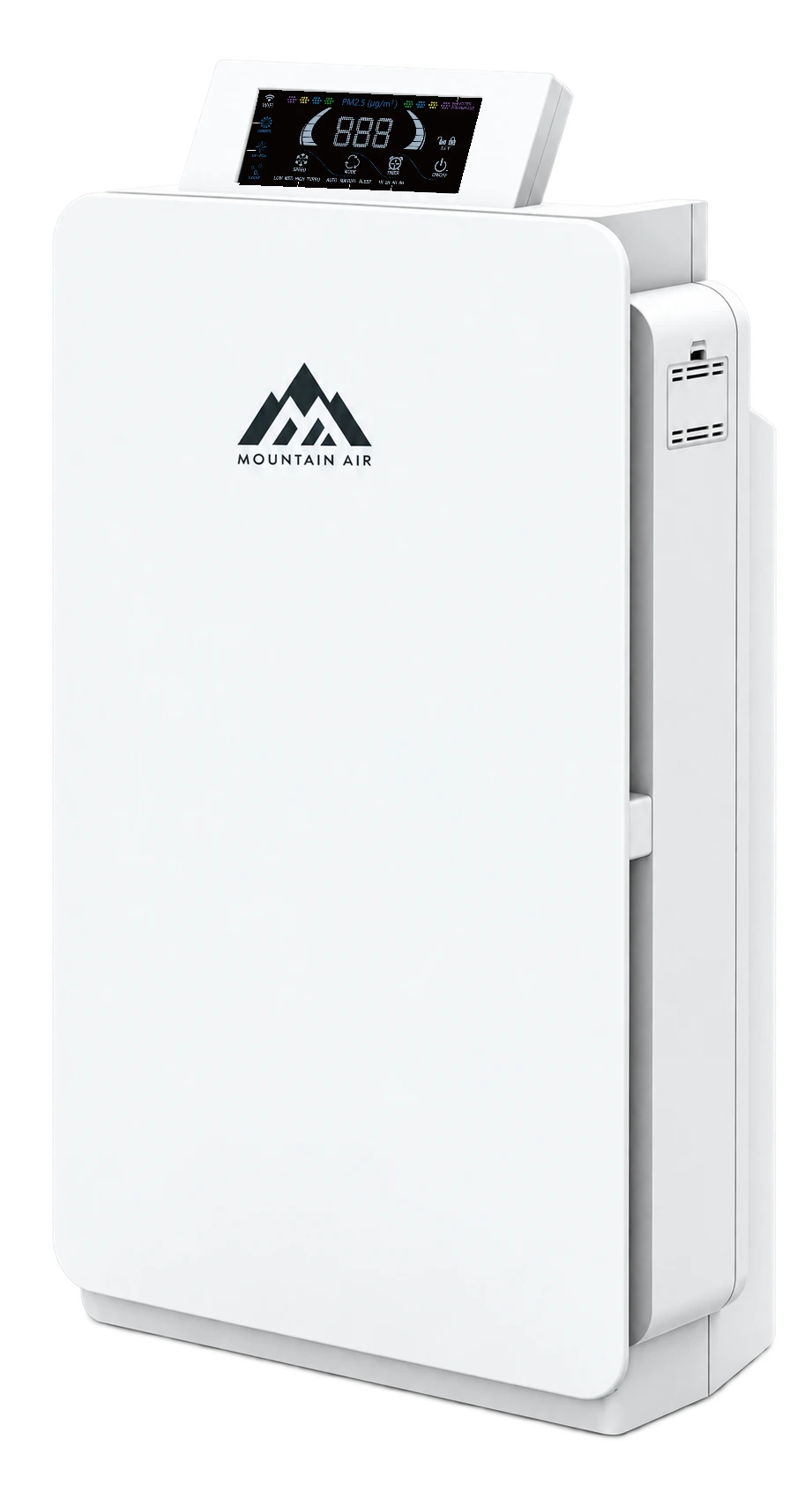
GL‑K180 · 9‑in‑1 air-cleaning system
- Pre-filter: hair and coarse dust
- HEPA: fine dust and skin particles
- Cold catalyst: formaldehyde
- Carbon fibre filter: odours
- Granular carbon: odours and some gases
- Photocatalysis: some gaseous impurities
- Ionisation: particle settling
- UV-C: action on microorganisms
- Ozonation: a separate mode. Do not use around people or animals.
Use the air filtration mode in the waiting area while patients are present. The GL‑K180 has a separate ozone mode. Consider it only for controlled treatment of an empty room without people or animals, following the unit’s instructions and with approval from the infection control lead. Medical disinfection follows the clinic’s approved protocol.
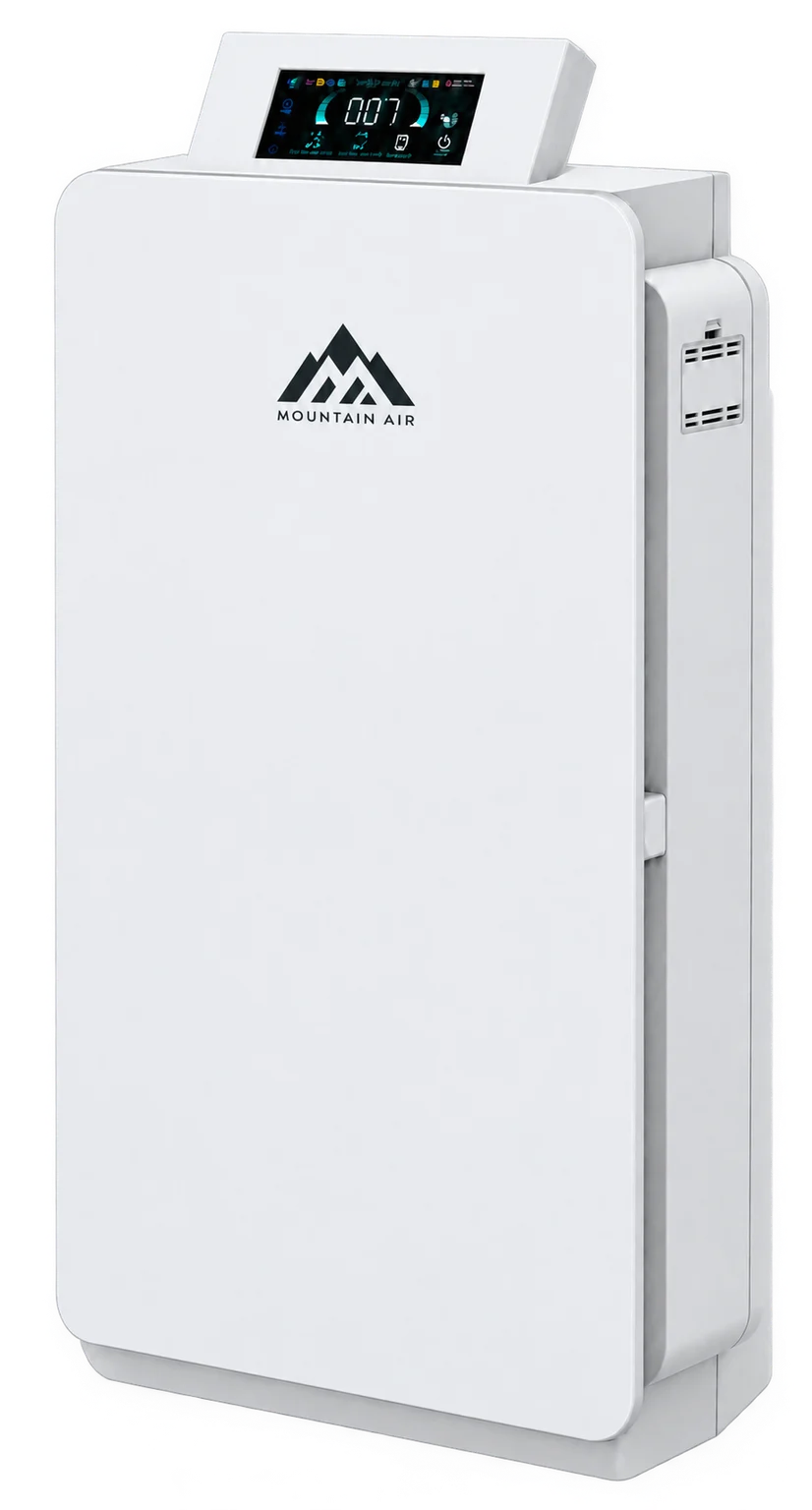
9 air-cleaning stages and functions

- Pre-filterCatches coarse dust, hair and pet fur.
- HEPA H13Captures fine particles, including PM2.5 and PM1.
- Cold catalystDesigned for some gaseous pollutants, including formaldehyde.
- Carbon fibre filterHelps reduce some odours.
- Granular activated carbonAdsorbs some odours and gaseous pollutants.
- PhotocatalysisDesigned to treat some gaseous impurities.
- IonisationHelps airborne particles settle.
- UV-CActs on microorganisms inside the unit.
- OzonationA separate mode for an empty room without people or animals.
03 · How to tell customers
What happens in the lobby before the first appointment?
Show what your team does for guests in this room. Film on location and use the sample copy once the purifier is installed.
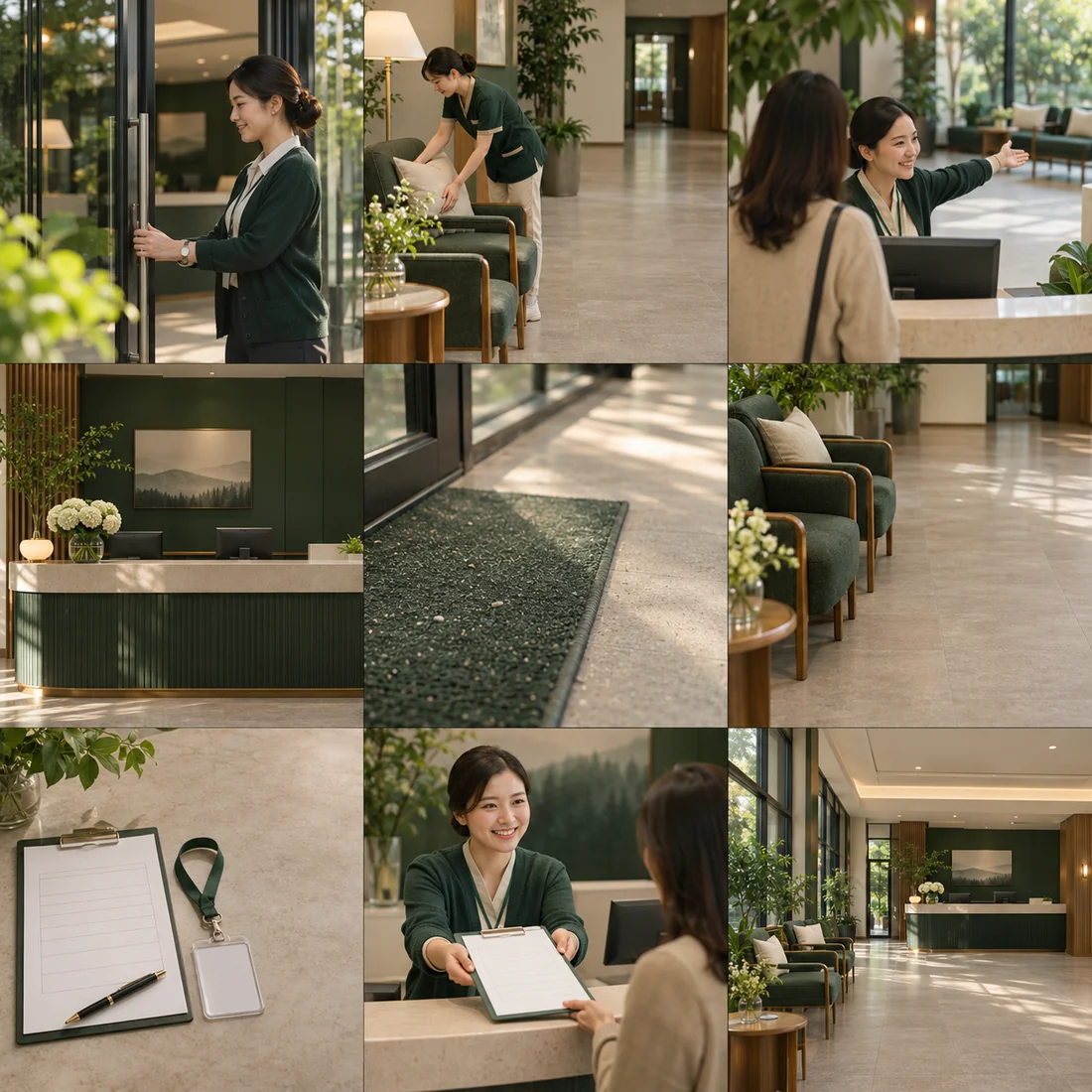
Reels · three shots
- Reception opens the empty waiting room
- Staff prepare the seating. Show a close-up of the air purifier running in the patient waiting area.
- Reception shows where visitors should wait
Finish with a link or button · Choose an appointment
.
Carousel · five slides
- Before opening
- Dust by the entrance
- Air purifier in the patient waiting area
- What to bring to your appointment
- Choose an appointment
Stories · ask, show and invite
- Poll · What matters most while you wait?
Clear directions
/A comfortable room
- Film the empty lobby and explain who maintains the filters.
- Finish with a link or button ·
Choose an appointment
.
Ready-to-use post copy
This waiting area has an air purifier. We maintain its filters on a schedule. Choose an appointment.
04 · What happens if nothing changes
Smog can linger in the waiting area
Patients bring in dust on their shoes throughout the day, and some fine particles can remain airborne in the waiting area after cleaning. Cleaning products can leave a lingering odour.
If the finishes or desk were renewed, paint, adhesive and furniture may add VOCs. Some pressed wood can release formaldehyde even after years of use.
During the heating season, emissions from heating plants and industry, vehicle exhaust and road dust add to the indoor burden. Outdoor PM1 and PM2.5 can enter through doors, fresh-air intakes and gaps even when windows are shut. If rubber is burning nearby, its smoke can add fine particles, gases and volatile organic compounds. A burning smell or visible haze does not tell you the concentration of fine particles.
05 · MOUNTAIN AIR air cleaning
Find the right air cleaning for your business
Start with one space. Tell us which room needs filtration, its floor area and its busiest hours. We will discuss positioning, settings, purchase or pilot terms, and filter care.
We can check PM2.5 and discuss where and when odours occur with your team.
Message us «I want air cleaning for my clinic».
MOUNTAIN AIR
+7 777 531 52 17mtair.kz@gmail.commtair.kzInstagramFacebookThreads