Hotels and hospitality
A guest opens the room door. The first impression is already forming.
MOUNTAIN AIR selects air-cleaning systems for businesses in Almaty and across Kazakhstan.
What we do
We select filtration for a particular room, waiting area or floor with recurring complaints, taking room size and turnaround between bookings into account.
We match the setting to your routine and check PM2.5.
We show staff how to clean the pre-filter and replace the other filters.
01 · What happens in the room
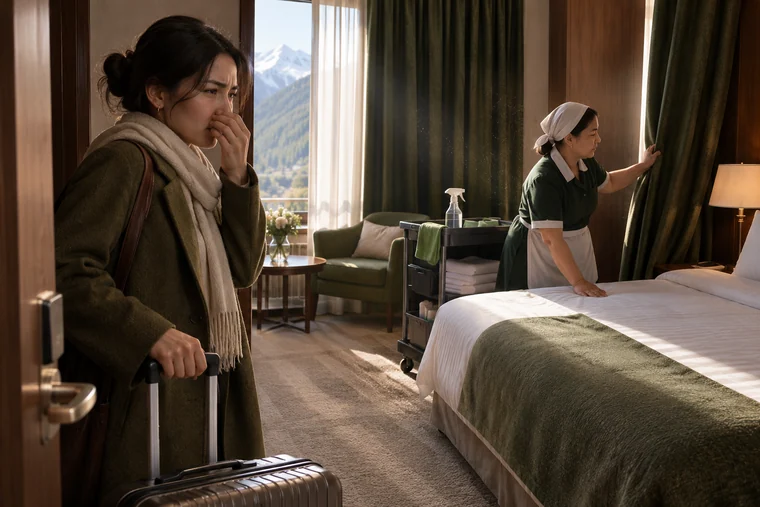
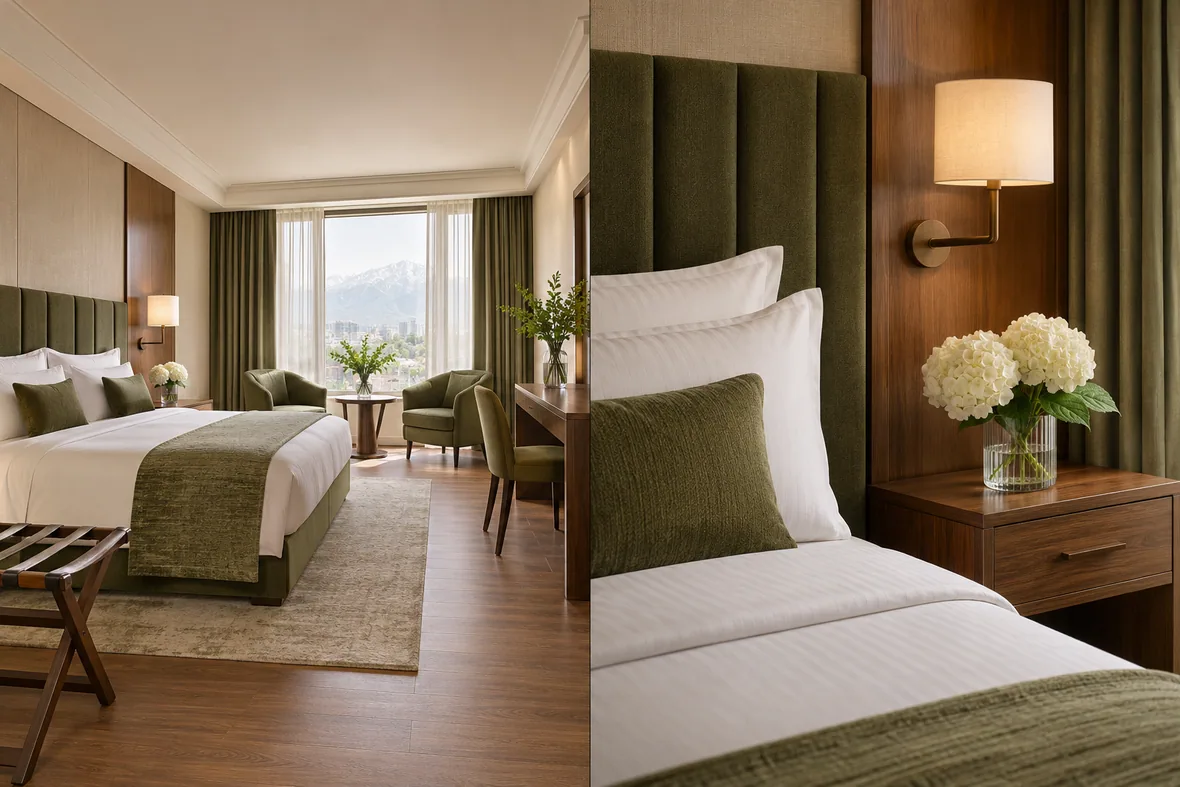
The guest opens the room door. A lingering smell is the first thing they notice.
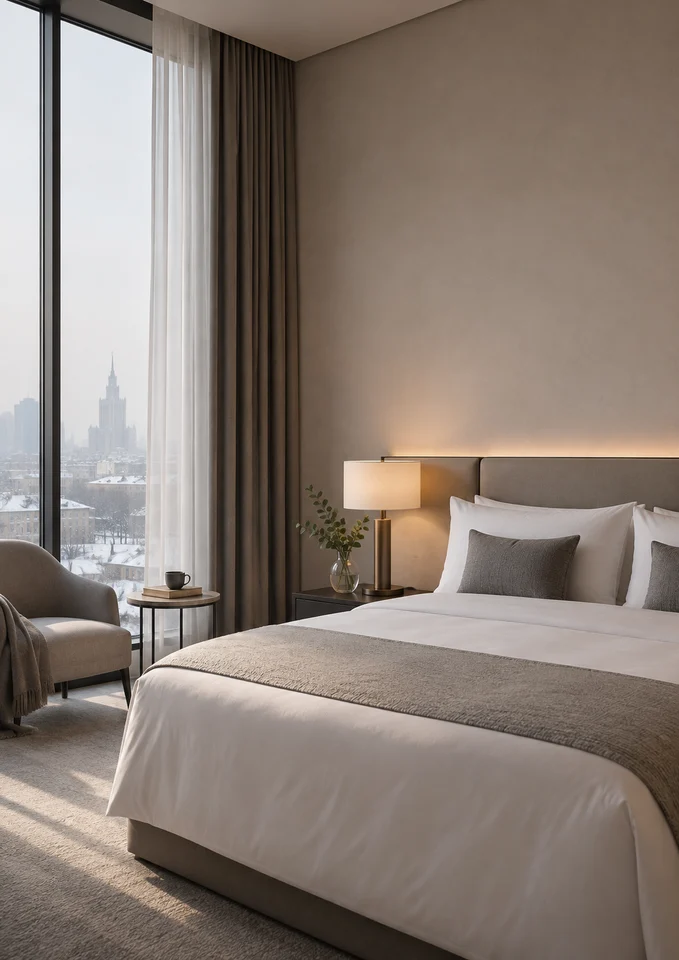
Conditions can vary between rooms on the same floor. Roadside rooms take in outdoor particles, and carpets and curtains can contribute dust indoors.
If a room has recently been renovated or redecorated, paint, varnish or adhesive odours can linger for a while. These products can release volatile organic compounds (VOCs). Formaldehyde is one of them. Some pressed-wood furniture can emit it when new and after years of use. Emissions usually decline over time and their duration depends on the material.
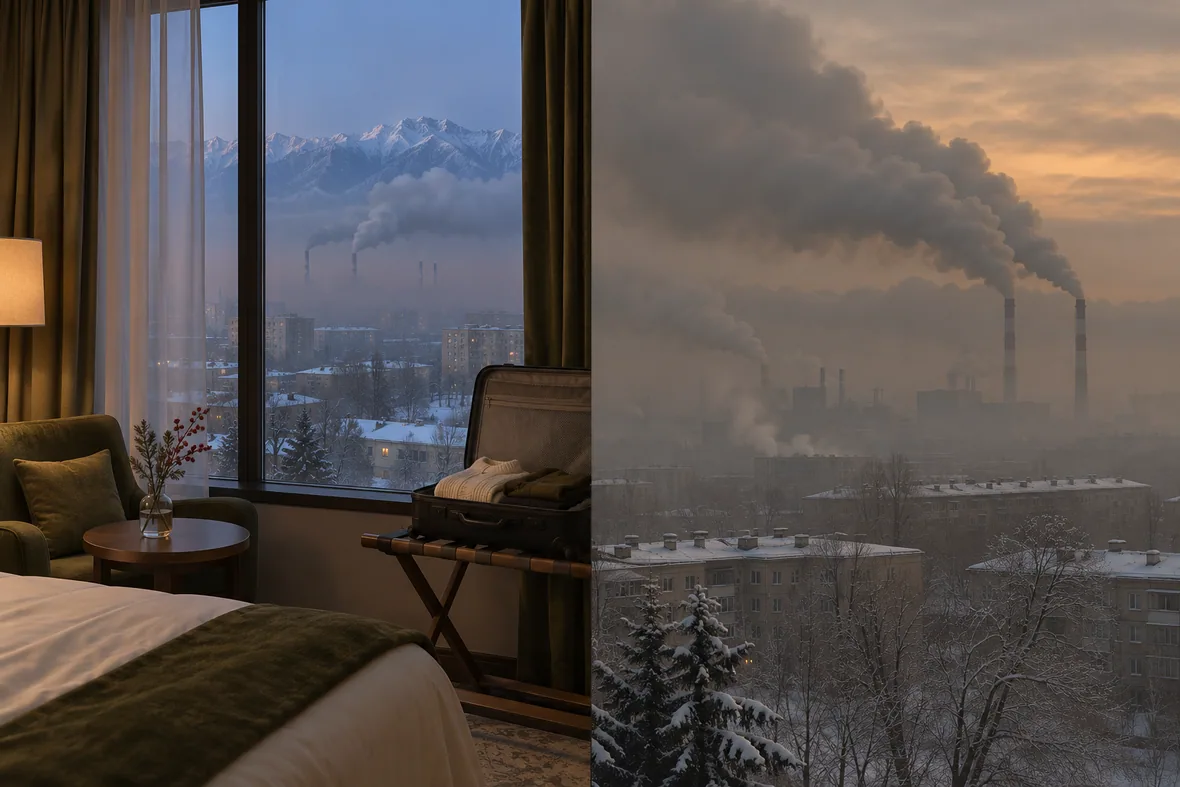
An open window gives outdoor PM2.5 a direct route inside. With windows shut, particles can still enter through doors, fresh-air intakes and leaks around windows and doors. Outdoor particles add to the dust and chemical odours already in the room.
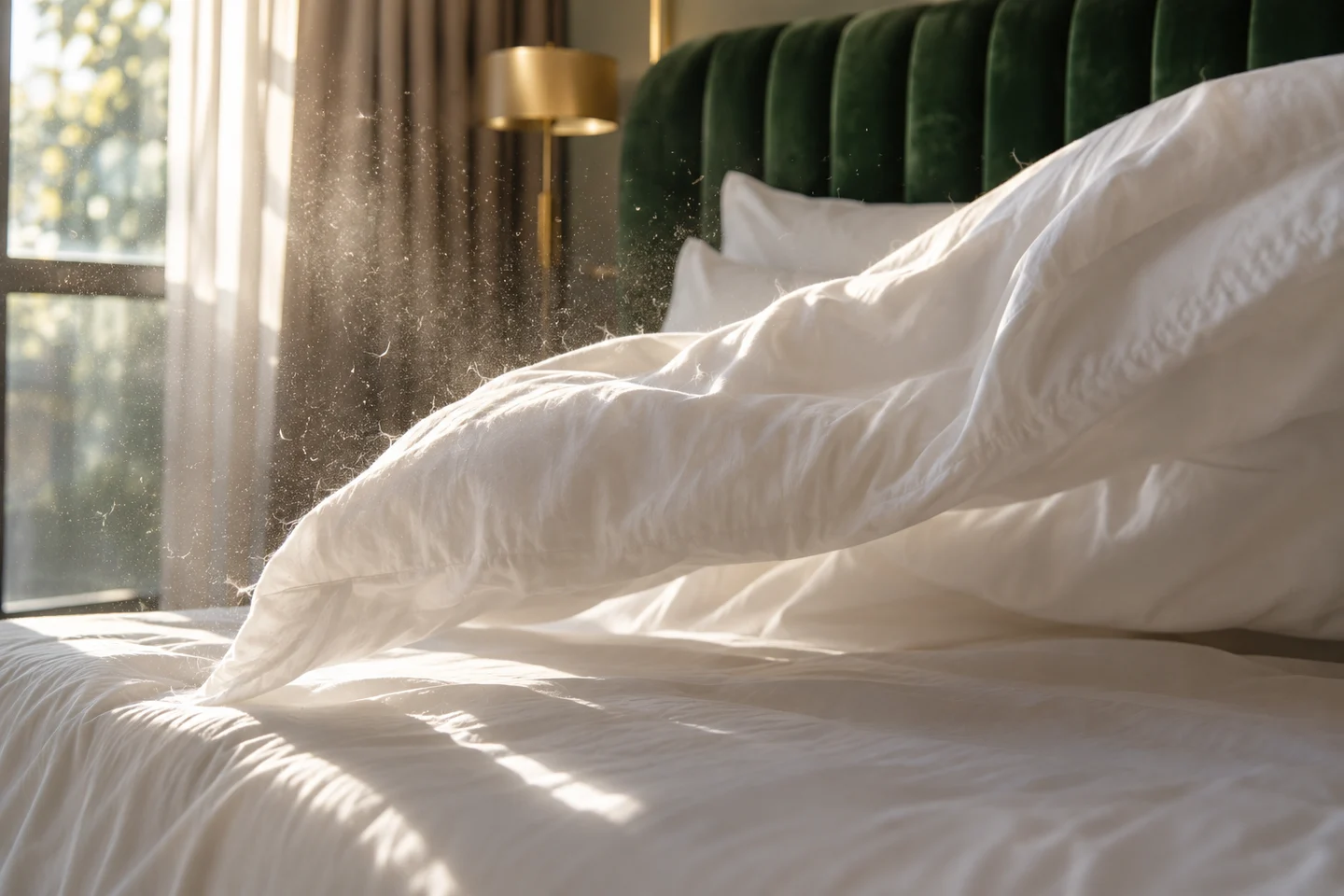
After a journey, guests want to put down their case and rest. Instead they notice a sharp smell left by cleaning product, perfume or tobacco and call reception. Fresh sheets and a tidy room no longer set the tone of the stay.
Housekeeping changes linens, opens curtains and vacuums. Fine dust can rise from textiles and carpets. There is another arrival soon after the room is ready. Newly updated rooms may also have odours from some finishes and furniture.
One incident can disrupt the whole shift. Housekeeping returns to the room, reception calls around and the guest is still standing with their case.
When smoke drifts in from outside
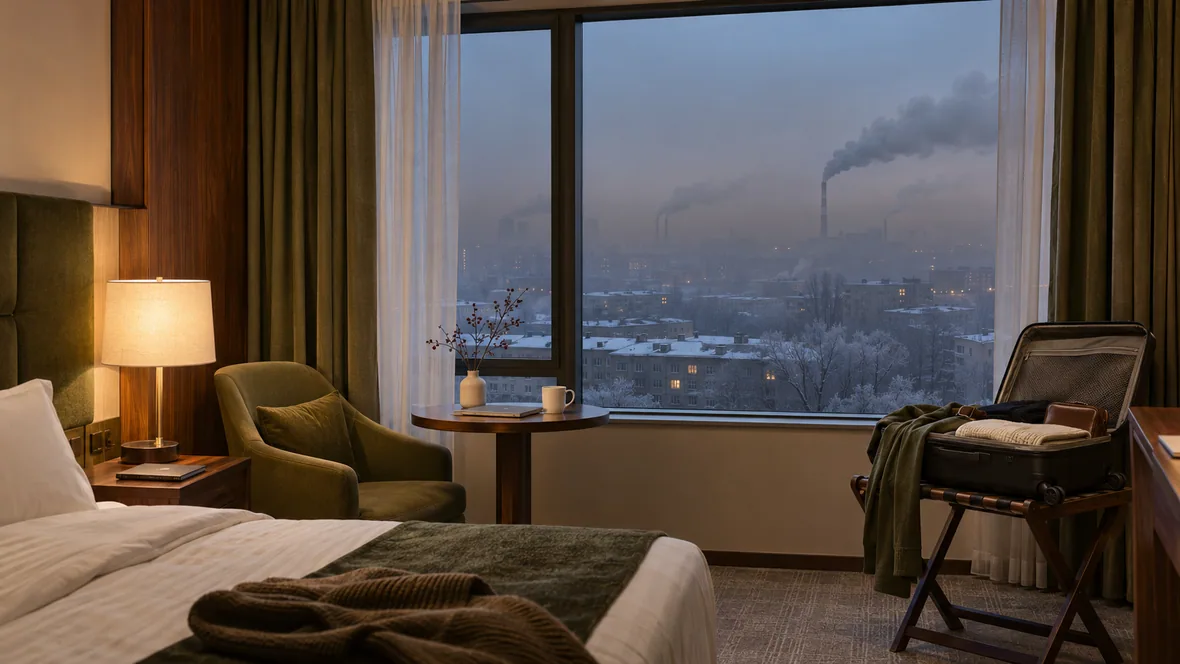
During heating season, fuel burning adds to road exhaust, industrial emissions and road dust. In calm weather and during a temperature inversion, pollution disperses more slowly and can build up near ground level.
Fine particles, including PM2.5 and PM1, can enter through windows, doors and fresh-air intakes. If tyres or rubber are burning, the smoke can also carry gaseous pollutants, including volatile organic compounds (VOCs). Haze and smoke odour alone tell you neither the source nor the particle concentration.
A roadside room can smell smoky after airing. Outdoor PM2.5 and PM1 can join dust from curtains and carpets, lingering cleaning odours and volatile compounds from new finishes.
02 · How we tackle it
Prepare the room air before check-in
Start with a room or category with recurring complaints about residual odours or dust. H13 HEPA captures fine particles from textiles and outdoors. The carbon layers address some odours and volatile compounds. Place the unit where guests can move freely and housekeeping can access the filters.
Compare PM2.5 after cleaning and before check-in under similar conditions. Housekeeping can check filter access and reception can track comments about odours. If smoke continues to enter from elsewhere, deal with its source first.
What the HEPA filter and the sorbent layers do
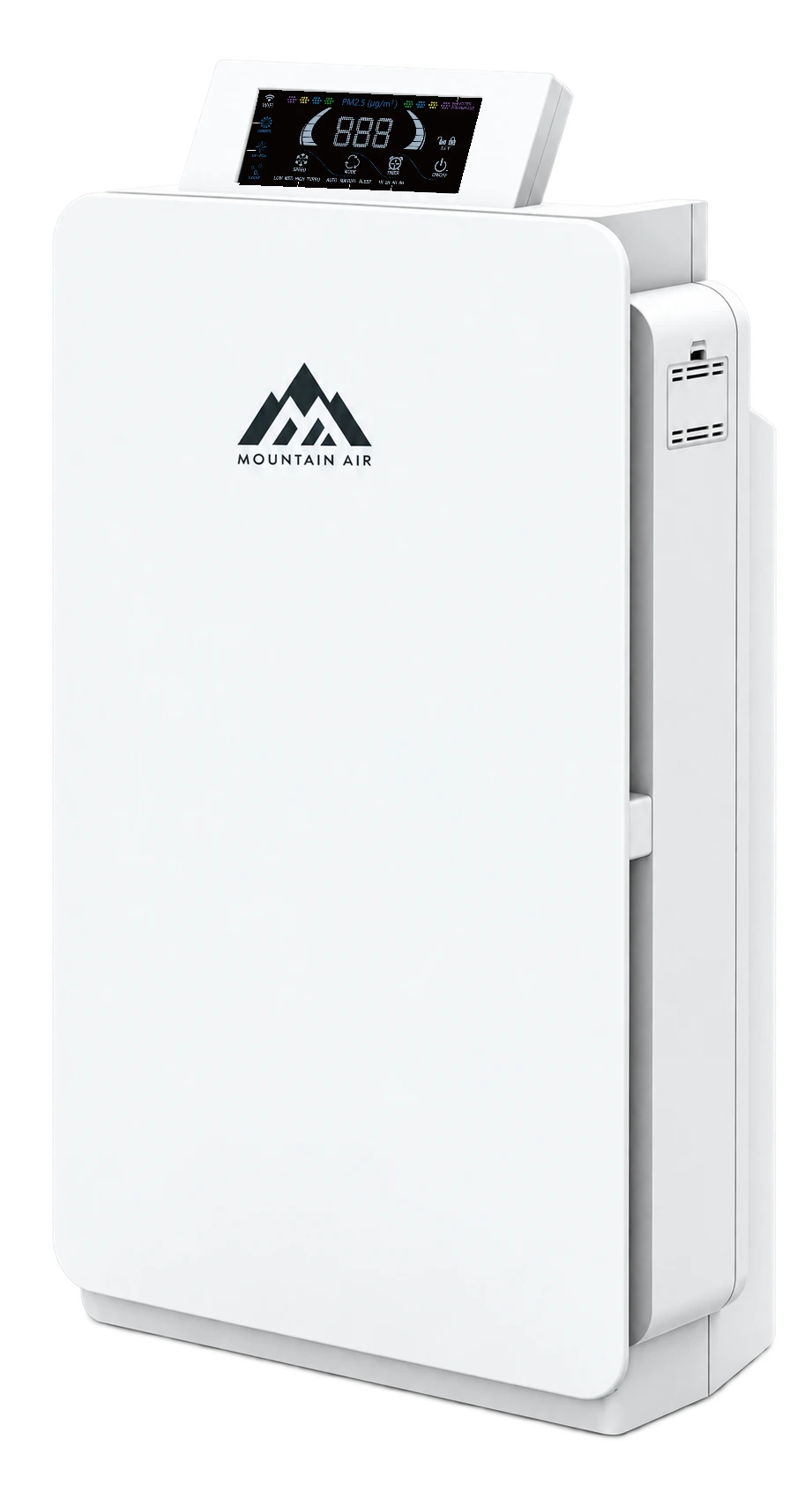
PM2.5 and PM1 are fine-particle fractions. H13 HEPA traps them in the air that passes through the filter. The GL‑K180 display reports PM2.5. Sorbent layers can reduce some odours and volatile organic compounds (VOCs). The cold-catalyst layer is designed for certain gaseous pollutants, including formaldehyde.
GL‑K180 · 9‑in‑1 air-cleaning system
- Pre-filter: hair and coarse dust
- HEPA: fine dust and skin particles
- Cold catalyst: formaldehyde
- Carbon fibre filter: odours
- Granular carbon: odours and some gases
- Photocatalysis: some gaseous impurities
- Ionisation: particle settling
- UV-C: action on microorganisms
- Ozonation: a separate mode. Do not use around people or animals.
The nine stages include filters and separate functions. Keep the ozone mode off when people or animals are present.
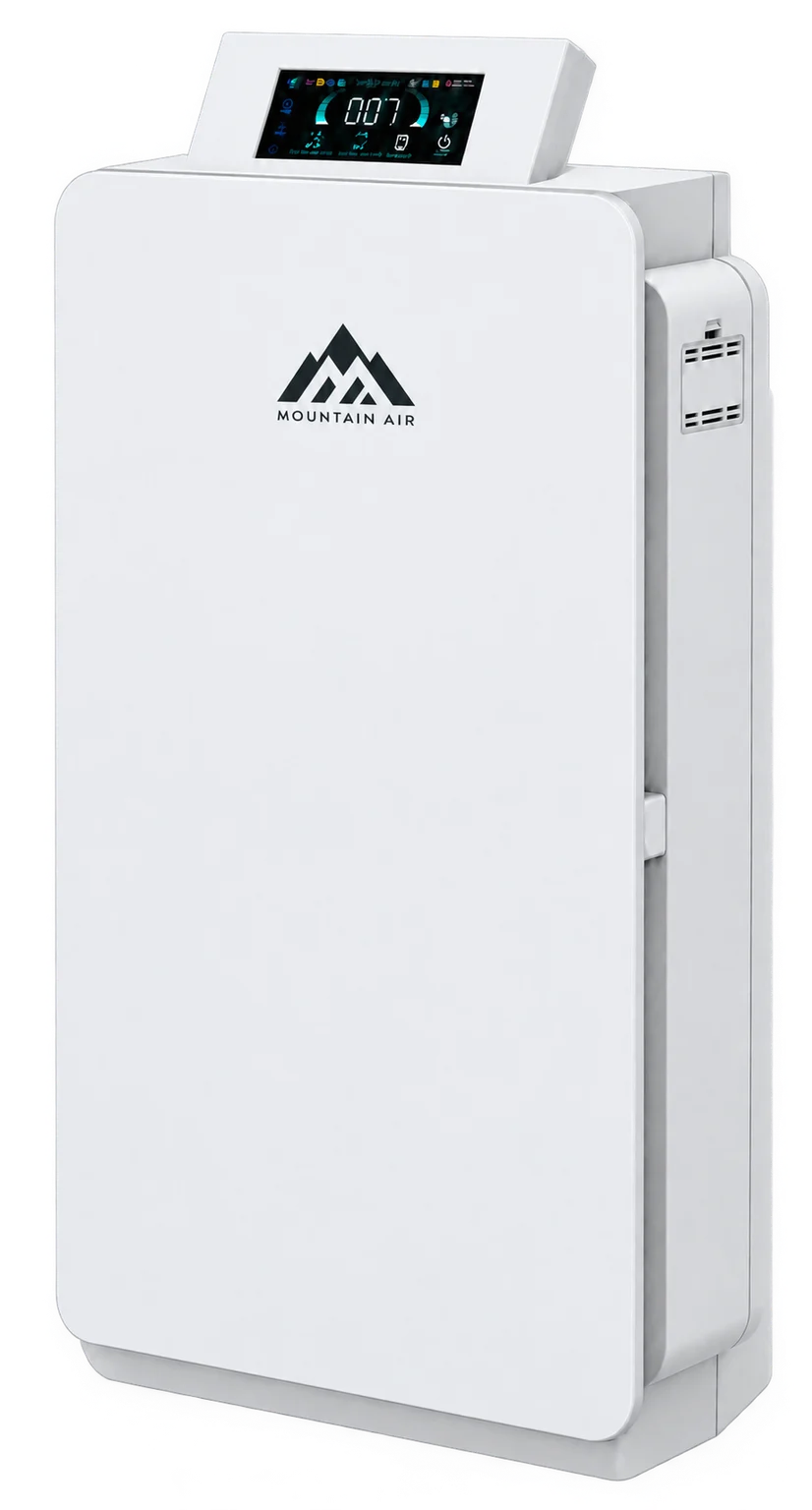
9 air-cleaning stages and functions

- Pre-filterCatches coarse dust, hair and pet fur.
- HEPA H13Captures fine particles, including PM2.5 and PM1.
- Cold catalystDesigned for some gaseous pollutants, including formaldehyde.
- Carbon fibre filterHelps reduce some odours.
- Granular activated carbonAdsorbs some odours and gaseous pollutants.
- PhotocatalysisDesigned to treat some gaseous impurities.
- IonisationHelps airborne particles settle.
- UV-CActs on microorganisms inside the unit.
- OzonationA separate mode for an empty room without people or animals.
03 · How to tell customers
What happens in your room before you arrive?
Show what your team does for guests in this room. Film on location and use the sample copy once the purifier is installed.
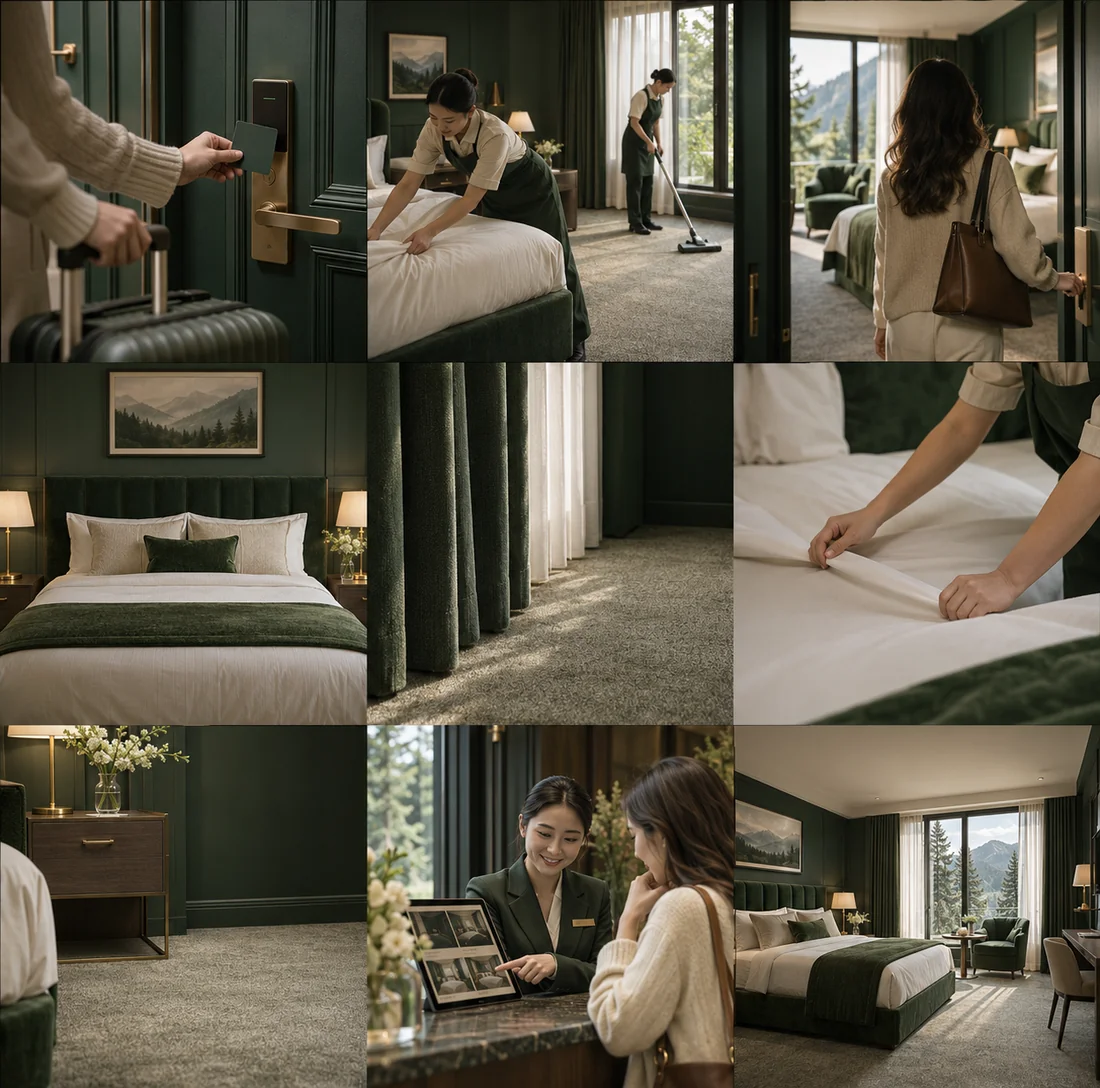
Reels · three shots
- A suitcase and a room key at the door
- Housekeeping changes linen, vacuums the carpet and checks the air purifier.
- The guest enters a prepared room
Finish with a link or button · Choose a room with a purifier
.
Carousel · five slides
- Before check-in
- Where dust settles
- How we prepare bedding and textiles
- Air purifier in the guest room before check-in
- Choose a room with a purifier
Stories · ask, show and invite
- Poll · What do you check first?
Room facilities
/How fresh it feels
- Show how one room category is prepared and name it.
- Finish with a link or button ·
Choose a room with a purifier
.
Ready-to-use post copy
Before check-in, we prepare your room and check its equipment, including the air purifier in this room category. Choose a room with a purifier.
04 · What happens if nothing changes
Every check-in starts at the same door
Changing linen and moving curtains can stir up textile dust. Cleaning or perfume odours may linger until the next check-in.
If the room was redecorated, paint, varnish or wallpaper adhesive can add odours. Some pressed-wood furniture can emit formaldehyde even after years of use.
During the heating season, emissions from heating plants and industry, vehicle exhaust and road dust add to the indoor burden. Outdoor PM1 and PM2.5 can enter through doors, fresh-air intakes and gaps even when windows are shut. If rubber is burning nearby, its smoke can add fine particles, gases and volatile organic compounds. A burning smell or visible haze does not tell you the concentration of fine particles.
05 · MOUNTAIN AIR air cleaning
Find the right air cleaning for your business
Start with one space. Tell us which room needs filtration, its floor area and its busiest hours. We will discuss positioning, settings, purchase or pilot terms, and filter care.
We can check PM2.5 and discuss where and when odours occur with your team.
Message us «I want air cleaning for my hotel».
MOUNTAIN AIR
+7 777 531 52 17mtair.kz@gmail.commtair.kzInstagramFacebookThreads