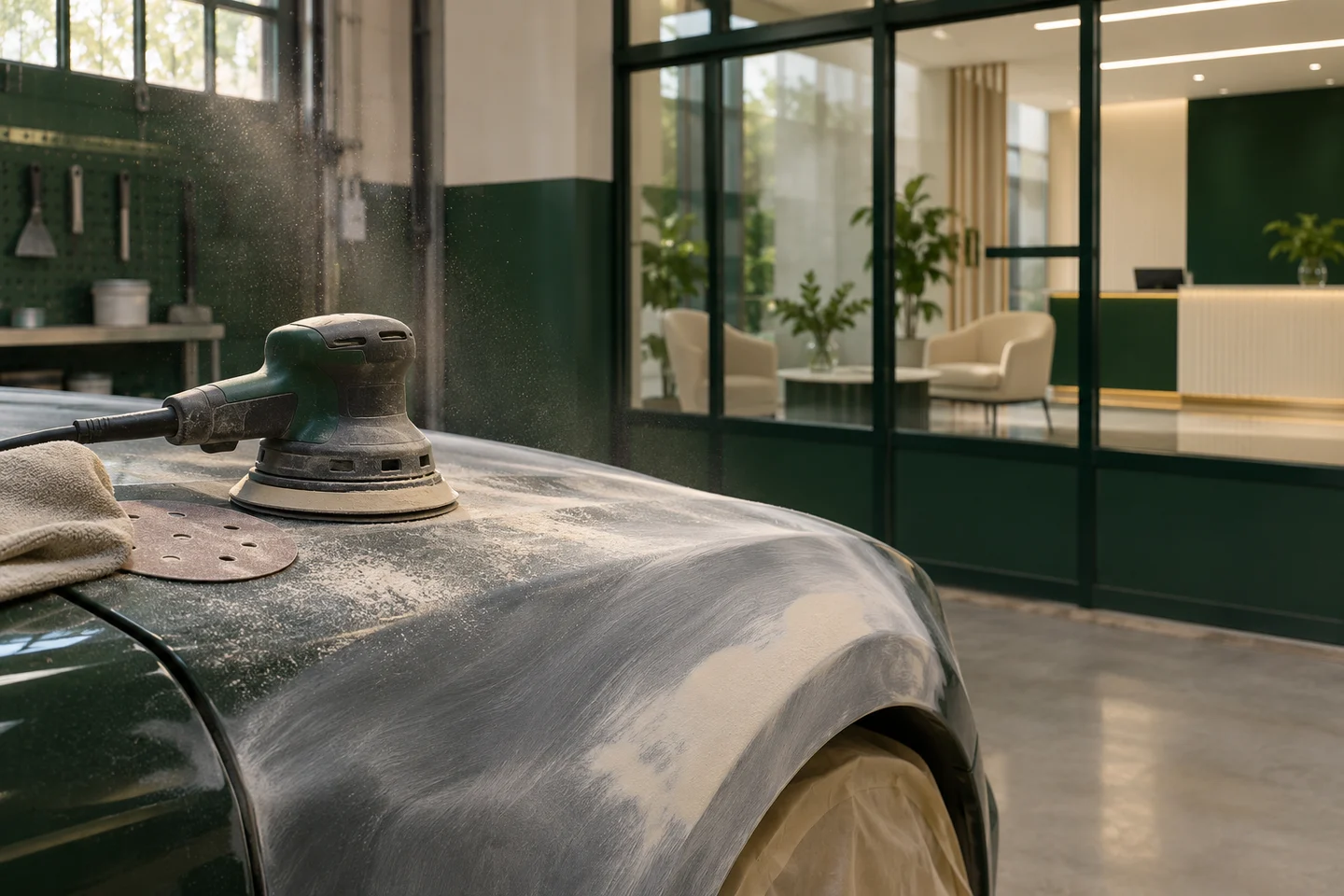
Auto body and paint centres
The bodywork is ready. The customer still has to wait for the paperwork.
MOUNTAIN AIR selects air-cleaning systems for businesses in Almaty and across Kazakhstan.
What we do
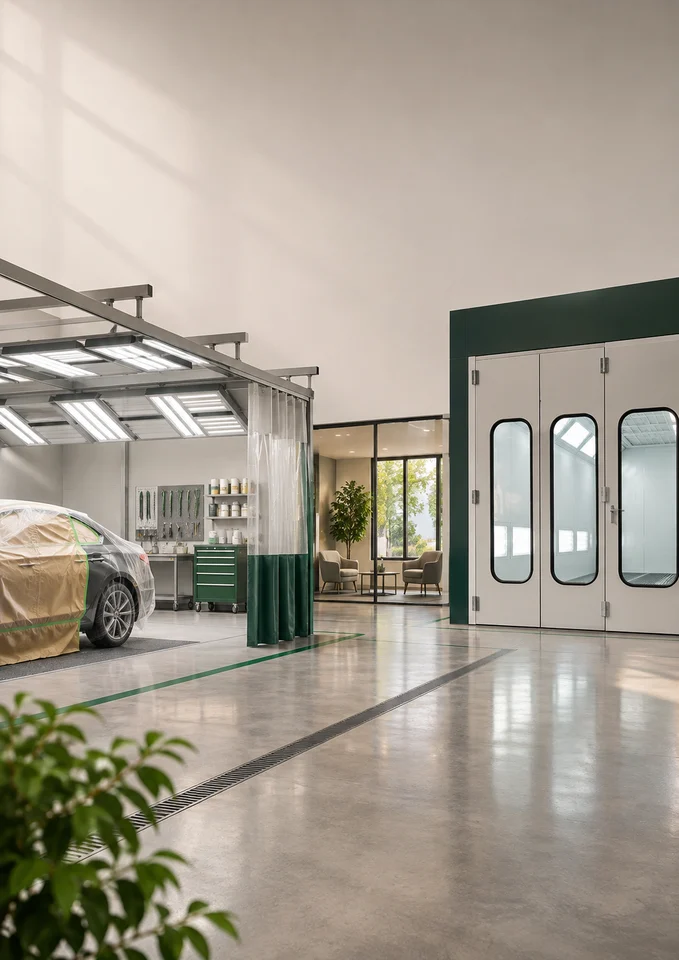
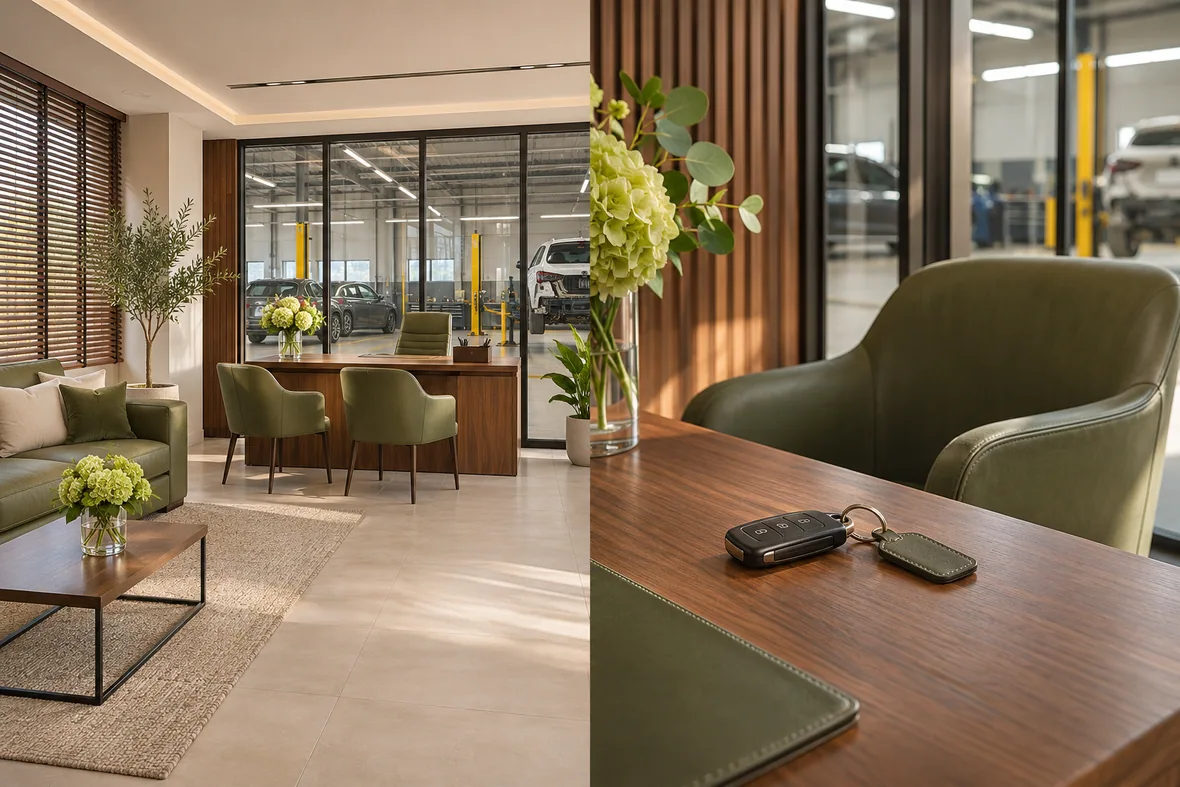
We select filtration for a separate customer room or office at a body repair centre. First we check how it is separated from workshop areas.
We match the setting to your routine and check PM2.5.
We show staff how to clean the pre-filter and replace the other filters.
01 · What happens in the room
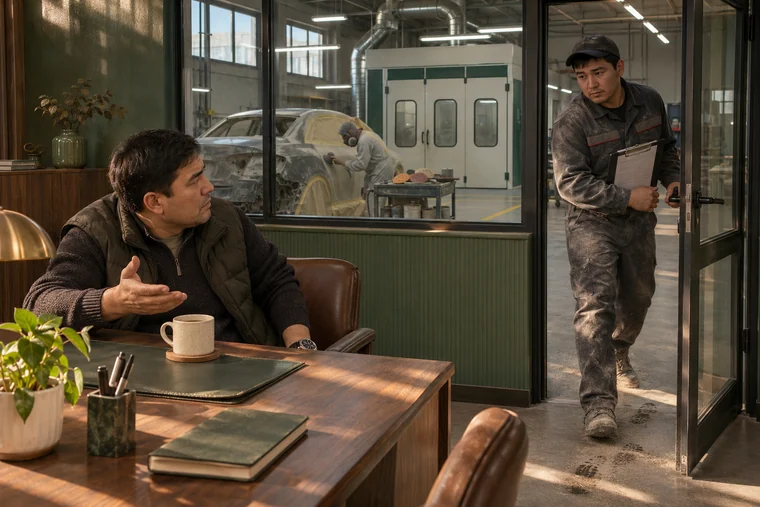
The technician is still preparing the estimate. The customer is already judging the waiting room.
In a separate customer room, check where the air comes from. If dust or vapours enter from the workshop, check room separation and workplace extraction.
If a room has recently been renovated or redecorated, paint, varnish or adhesive odours can linger for a while. These products can release volatile organic compounds (VOCs). Formaldehyde is one of them. Some pressed-wood furniture can emit it when new and after years of use. Emissions usually decline over time and their duration depends on the material.
An open window gives outdoor PM2.5 a direct route inside. With windows shut, particles can still enter through doors, fresh-air intakes and leaks around windows and doors. Outdoor particles add to the dust and chemical odours already in the room.
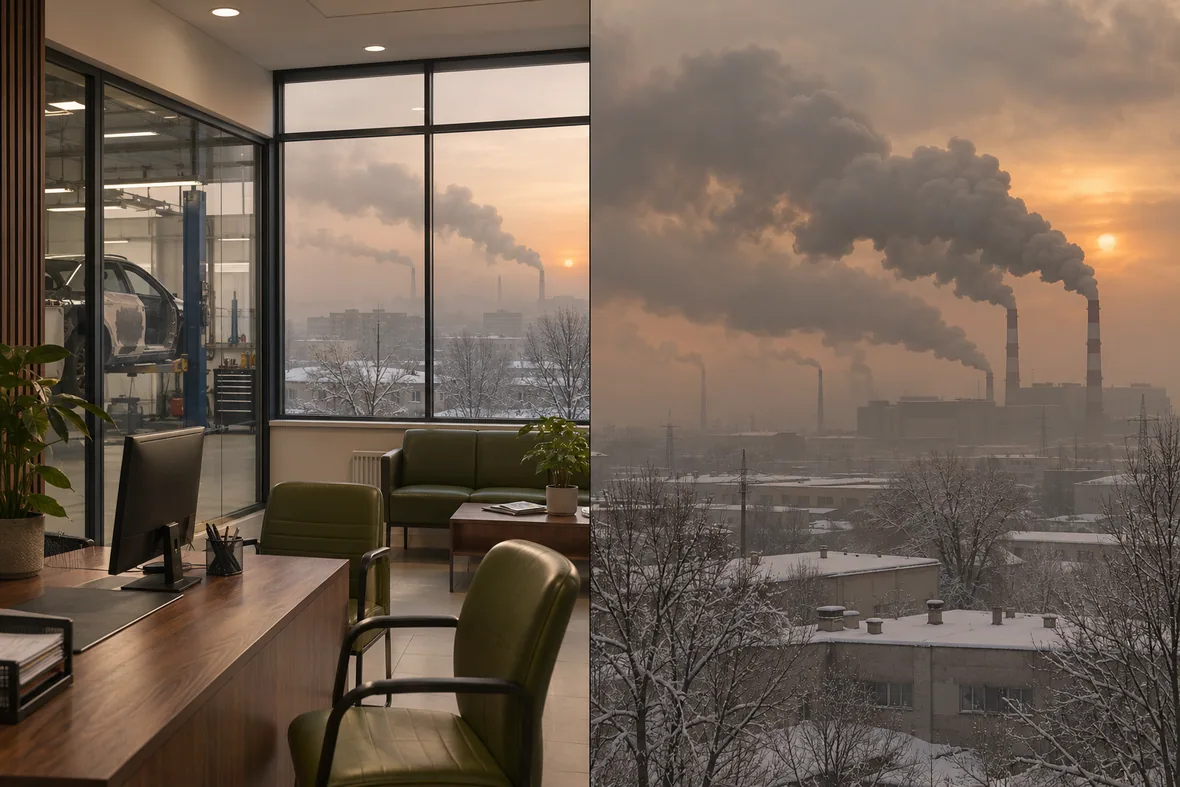
The workshop door opens and a technician brings the paperwork through. Dust can travel on clothing and from the street, and air from the workshop can carry odours. The customer wants to talk through a quote while work continues behind the glass.
If coatings can be smelled in the customer room, check extraction and workshop separation first. A room purifier is not sized for industrial levels of contaminants. Once that source is controlled, the customer room has a smaller job left: airborne dust, outdoor particles and some ordinary odours.
The issue may only show up at particular times: when vehicle doors are wide open or when technicians walk repeatedly between the office and workshop.
When smoke drifts in from outside
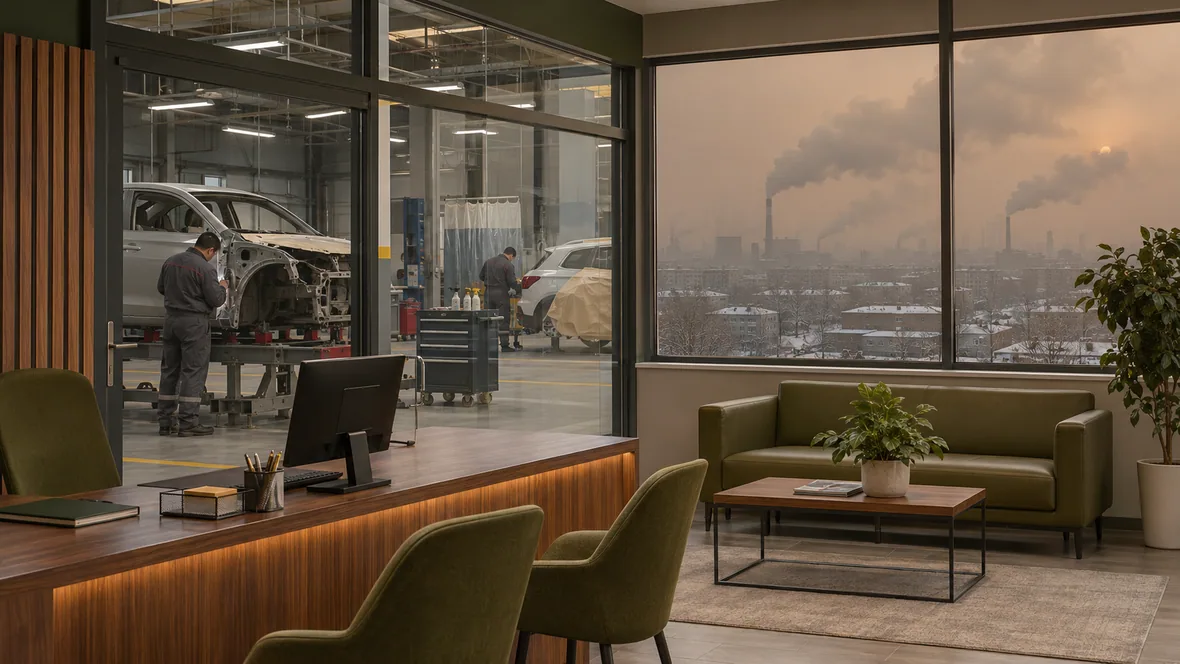
During heating season, fuel burning adds to road exhaust, industrial emissions and road dust. In calm weather and during a temperature inversion, pollution disperses more slowly and can build up near ground level.
Fine particles, including PM2.5 and PM1, can enter through windows, doors and fresh-air intakes. If tyres or rubber are burning, the smoke can also carry gaseous pollutants, including volatile organic compounds (VOCs). Haze and smoke odour alone tell you neither the source nor the particle concentration.
A body shop has sanding dust and vapours from paints and solvents. The entrance can also admit smog from the road or industrial area. Stop airflow from the workshop first, then assess street and ordinary indoor particles in the customer room.
02 · How we tackle it
Equip the separate customer room
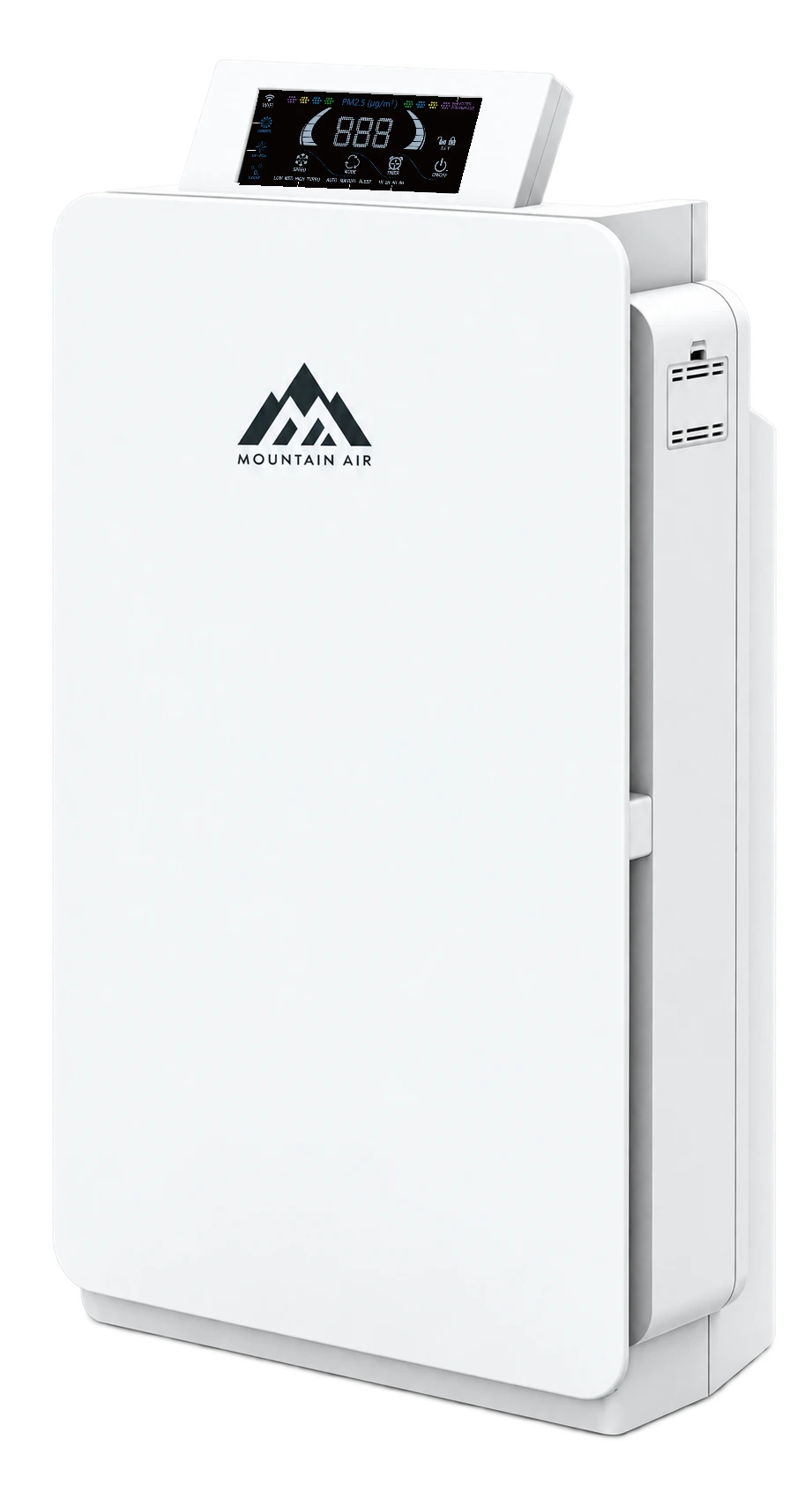
After the workshop airflow and extraction have been addressed, select the GL‑K180 for the waiting room. H13 HEPA filters fine particles in the room air and sorbent layers can reduce some ordinary odours. Solvent vapours and painting need workplace controls.
Compare PM2.5 in the waiting room during normal handover times. Particle readings tell you nothing about vapour concentrations. Check access for filter maintenance at the proposed location.
What the HEPA filter and the sorbent layers do
PM2.5 and PM1 are fine-particle fractions. H13 HEPA traps them in the air that passes through the filter. The GL‑K180 display reports PM2.5. Sorbent layers can reduce some odours and volatile organic compounds (VOCs). The cold-catalyst layer is designed for certain gaseous pollutants, including formaldehyde.
GL‑K180 · 9‑in‑1 air-cleaning system
- Pre-filter: hair and coarse dust
- HEPA: fine dust and skin particles
- Cold catalyst: formaldehyde
- Carbon fibre filter: odours
- Granular carbon: odours and some gases
- Photocatalysis: some gaseous impurities
- Ionisation: particle settling
- UV-C: action on microorganisms
- Ozonation: a separate mode. Do not use around people or animals.
The nine stages include filters and separate functions. Keep the ozone mode off when people or animals are present.
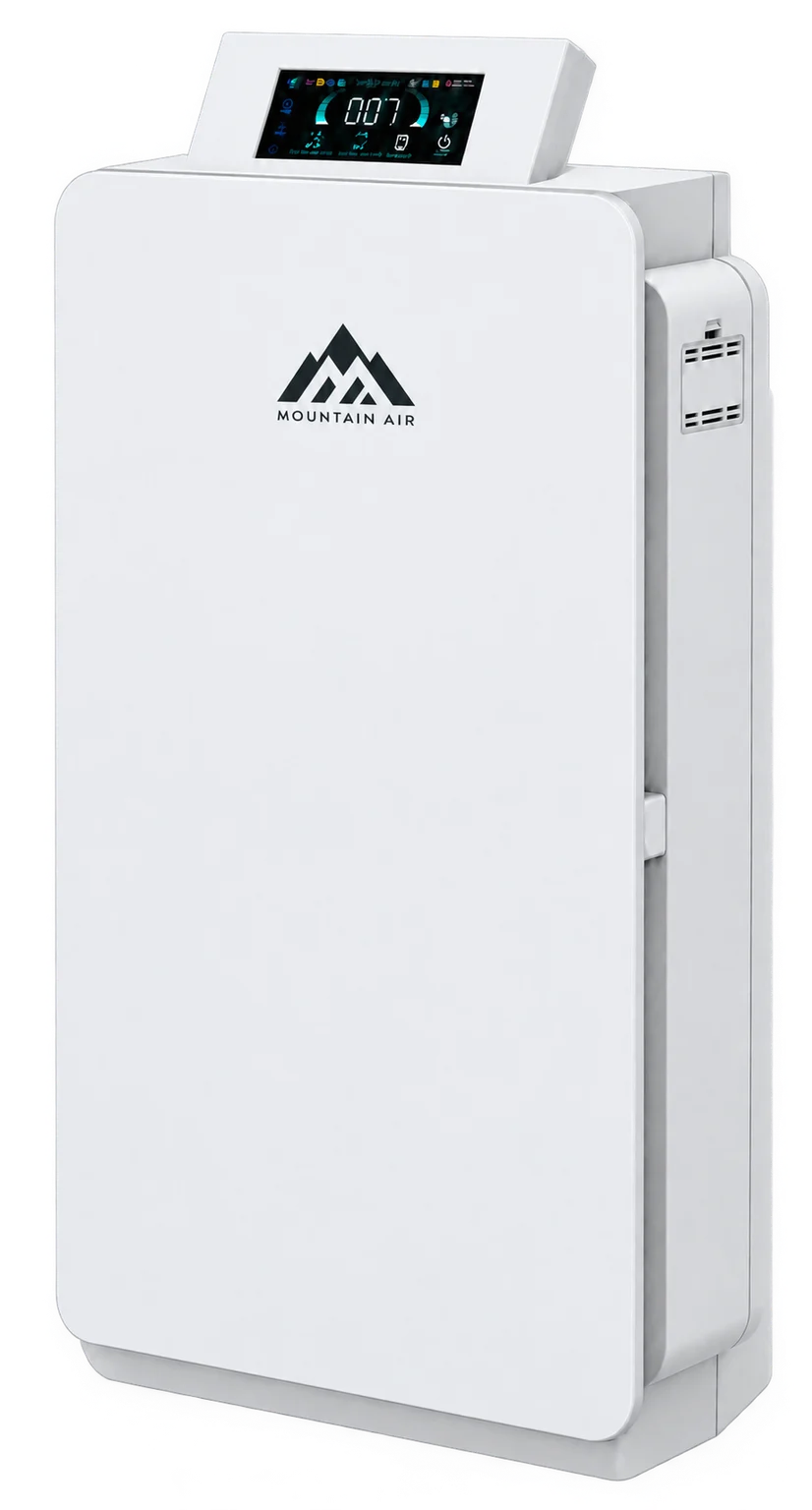
9 air-cleaning stages and functions

- Pre-filterCatches coarse dust, hair and pet fur.
- HEPA H13Captures fine particles, including PM2.5 and PM1.
- Cold catalystDesigned for some gaseous pollutants, including formaldehyde.
- Carbon fibre filterHelps reduce some odours.
- Granular activated carbonAdsorbs some odours and gaseous pollutants.
- PhotocatalysisDesigned to treat some gaseous impurities.
- IonisationHelps airborne particles settle.
- UV-CActs on microorganisms inside the unit.
- OzonationA separate mode for an empty room without people or animals.
03 · How to tell customers
Where can I wait while the estimate is being prepared?
Show what your team does for guests in this room. Film on location and use the sample copy once the purifier is installed.
Reels · three shots
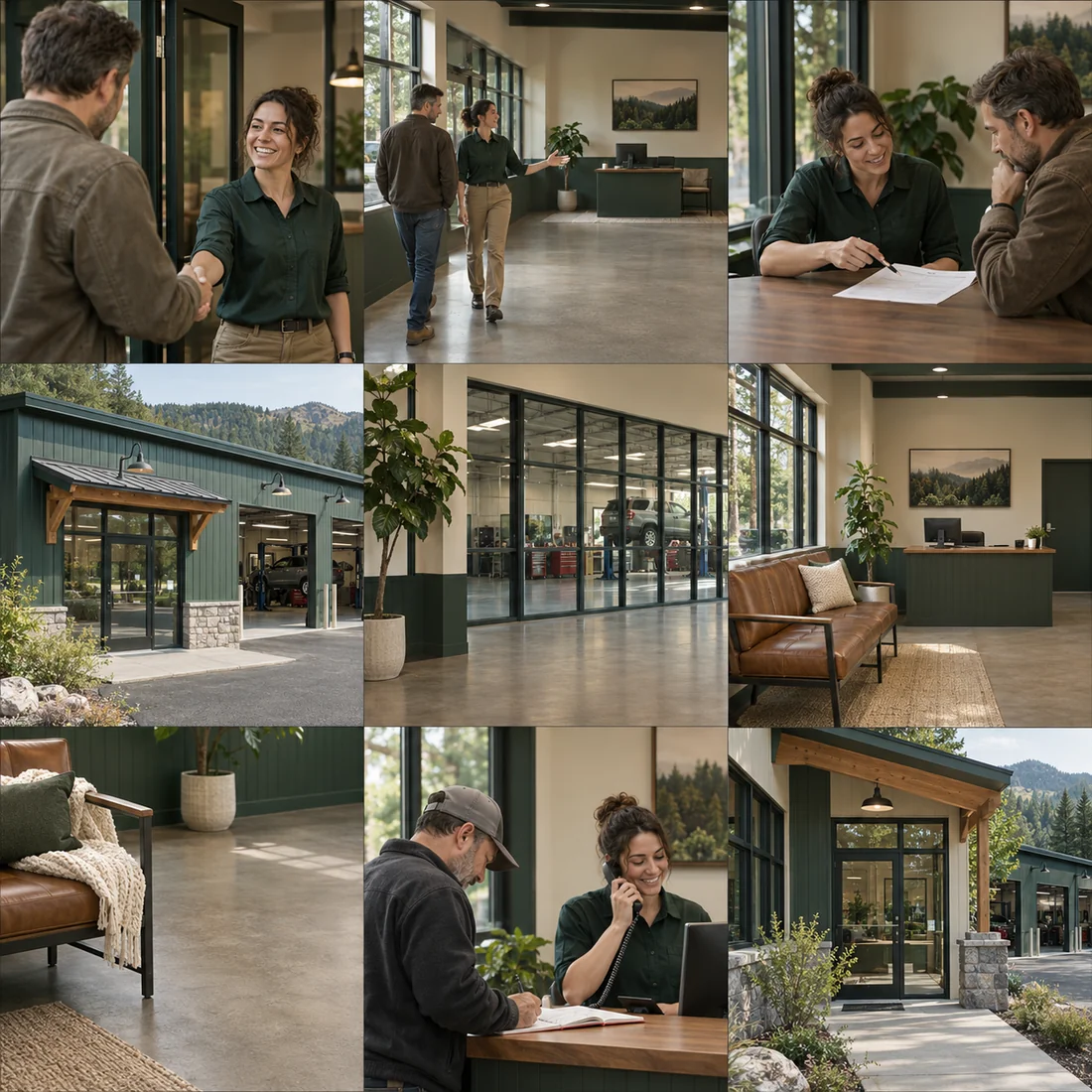
- An adviser greets the customer at the entrance
- Walk into the separate waiting room and show its equipment. Show the air purifier running.
- Review the estimate together at the table
Finish with a link or button · Book a repair estimate
.
Carousel · five slides
- Where to enter for an estimate
- How the customer room is separated
- What is provided in the waiting area
- Air purifier in the separate customer room
- Book a repair estimate
Stories · ask, show and invite
- Poll · What do you want to know first?
Timing
/Cost
- Show the separate entrance and where estimates are discussed.
- Finish with a link or button ·
Book a repair estimate
.
Ready-to-use post copy
We discuss estimates and paperwork in a separate customer room with an air purifier. Book a repair estimate.
04 · What happens if nothing changes
The next handover starts in the same room
If air passes from the workshop to the customer room, sanding dust and coating vapours can return every time the door opens. Room separation and workplace extraction address those sources.
A separate waiting room can still have its own sources, including road dust on shoes and paint or adhesives after a refit.
During the heating season, emissions from heating plants and industry, vehicle exhaust and road dust add to the indoor burden. Outdoor PM1 and PM2.5 can enter through doors, fresh-air intakes and gaps even when windows are shut. If rubber is burning nearby, its smoke can add fine particles, gases and volatile organic compounds. A burning smell or visible haze does not tell you the concentration of fine particles.
05 · MOUNTAIN AIR air cleaning
Find the right air cleaning for your business
Start with one space. Tell us which room needs filtration, its floor area and its busiest hours. We will discuss positioning, settings, purchase or pilot terms, and filter care.
We can check PM2.5 and discuss where and when odours occur with your team.
Message us «I want air cleaning for my body shop’s customer area».
MOUNTAIN AIR
+7 777 531 52 17mtair.kz@gmail.commtair.kzInstagramFacebookThreads